
A fleet is measured by vehicle availability, and every day off the road comes out of the operating budget
We shorten time back to service.
A fleet operator is not buying equipment; they are buying availability hours. A vehicle waiting for a free bay costs more than the part it needs, and a central workshop without planning turns into a car park for grounded vehicles.
Operational challenges
What stalls production in this sector
The challenges that recur in the fleet sector.
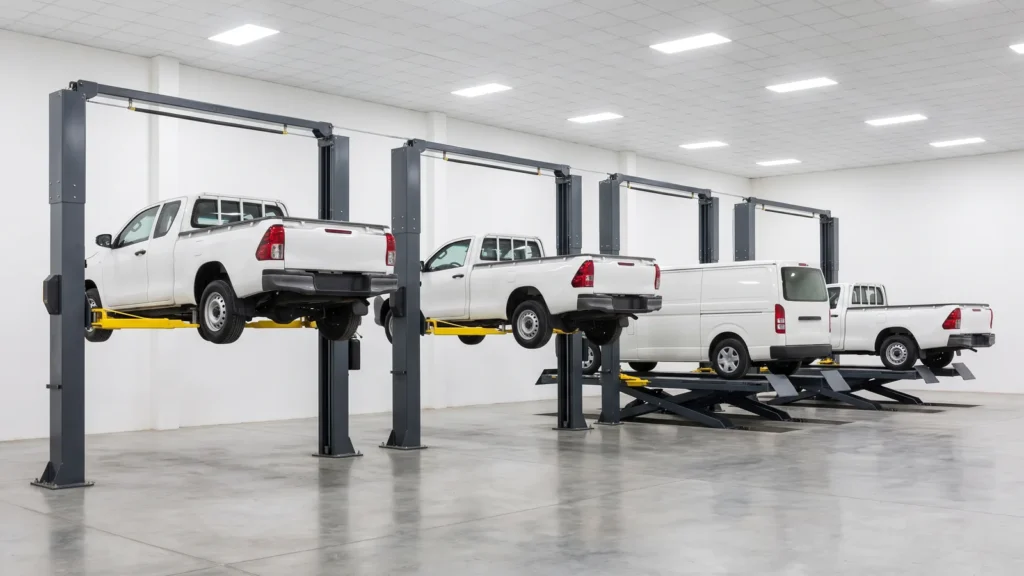
Downtime is the real cost
In a fleet, a grounded vehicle disrupts a contract, a transport route or a service. Downtime costs more than the repair itself, so the workshop is judged on time back to service rather than on jobs completed.
A mixed parc demands a capacity range, not one rating
A single fleet may mix passenger cars, minibuses and light commercial vehicles. Equipping the workshop with one lift rating means part of the fleet gets repaired somewhere else.
Scheduled preventive work needs dedicated bays
Fleets run on scheduled preventive maintenance rather than fix-on-failure. Mixing scheduled and breakdown work in the same bays cancels the schedule in practice, because breakdowns always displace it.
The operating environment is hard on vehicle and equipment alike
Long distances, heat and dust accelerate vehicle wear and raise service frequency, while shortening the life of the workshop equipment’s own filters and seals.
Documentation is a contractual condition
Operations and maintenance contracts require job records, asset tracking and conformity evidence. A fit-out that does not support documentation produces a workshop that works but cannot prove what it did.
Our approach
How each challenge is addressed
At the level of approach and configuration — before any product is named.
We start from the fleet mix, not from an equipment list. We identify your heaviest and longest vehicle and the type you run most, then build the capacity and height range around that distribution rather than an average that represents nobody.
We separate scheduled work from breakdowns. Dedicating bays to preventive maintenance is what makes the schedule executable. That is a space-allocation decision before it is an equipment-purchase decision.
We configure for the climate, not for the imported spec as-is. Filtration, replacement intervals and component protection are discussed with every proposal, because dust and heat are what will decide your downtime in year three.
We produce an equipment list that can go into a tender document. Written technical specifications and verifiable conformity make the equipment list usable in a tender or a direct purchase without rewriting it.
Recommended equipment
Configurations that serve this sector
Listed as we actually supply them — nothing appears here unless we serve this sector with it.
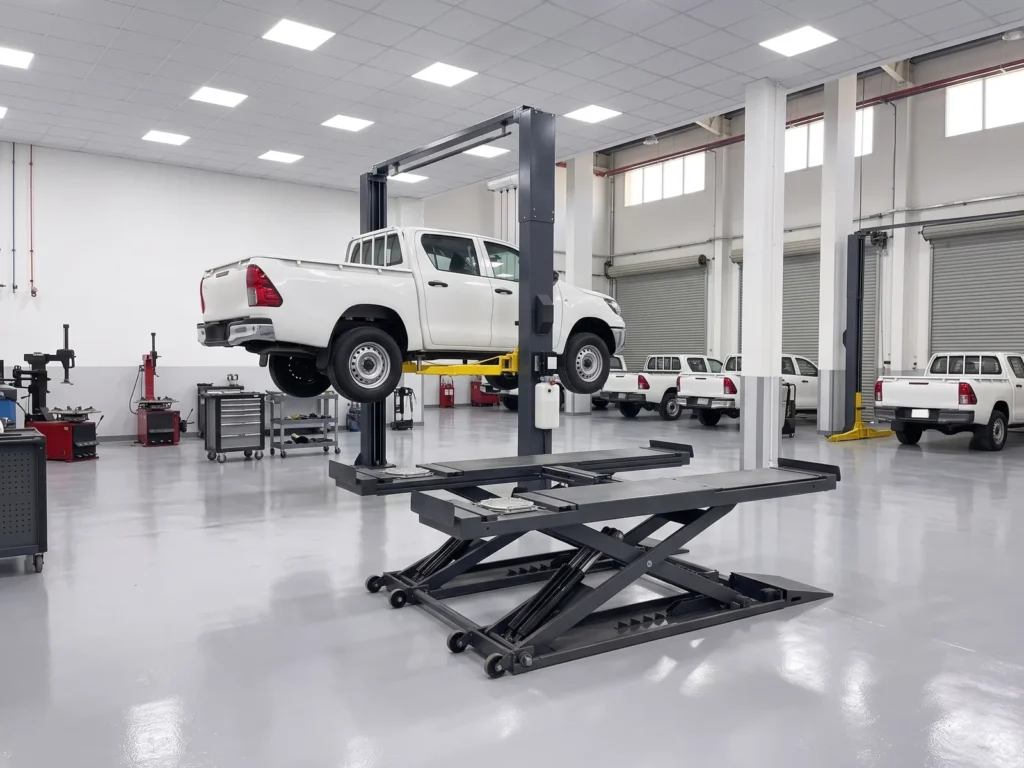
Vehicle Lifts & Lifting Equipment
A capacity range that covers a mixed parc, including movable models that serve more than one bay.
1,200–4,500 kg capacity · 600–1,999 mm lift height · 2.2–3 kW Family details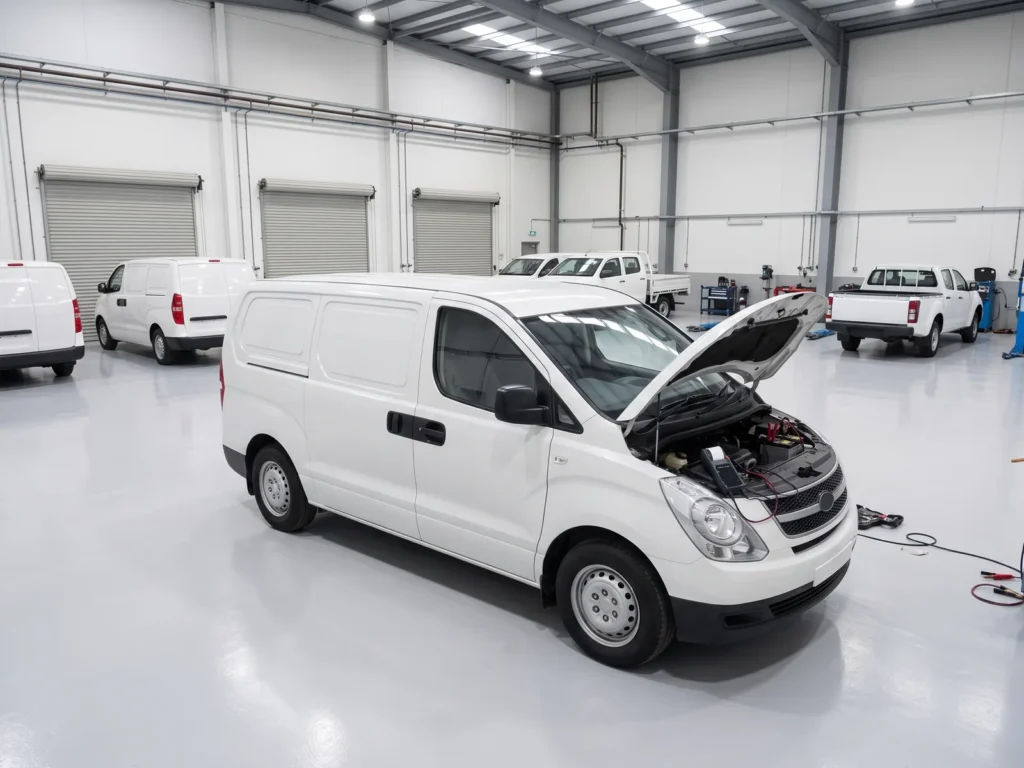
General Workshop Equipment & Tooling
Diagnostics and general workshop tooling to support scheduled preventive maintenance.
Scan and programming for 1996-onward vehicles (MS906 MAX) · ADAS PRO calibration Family details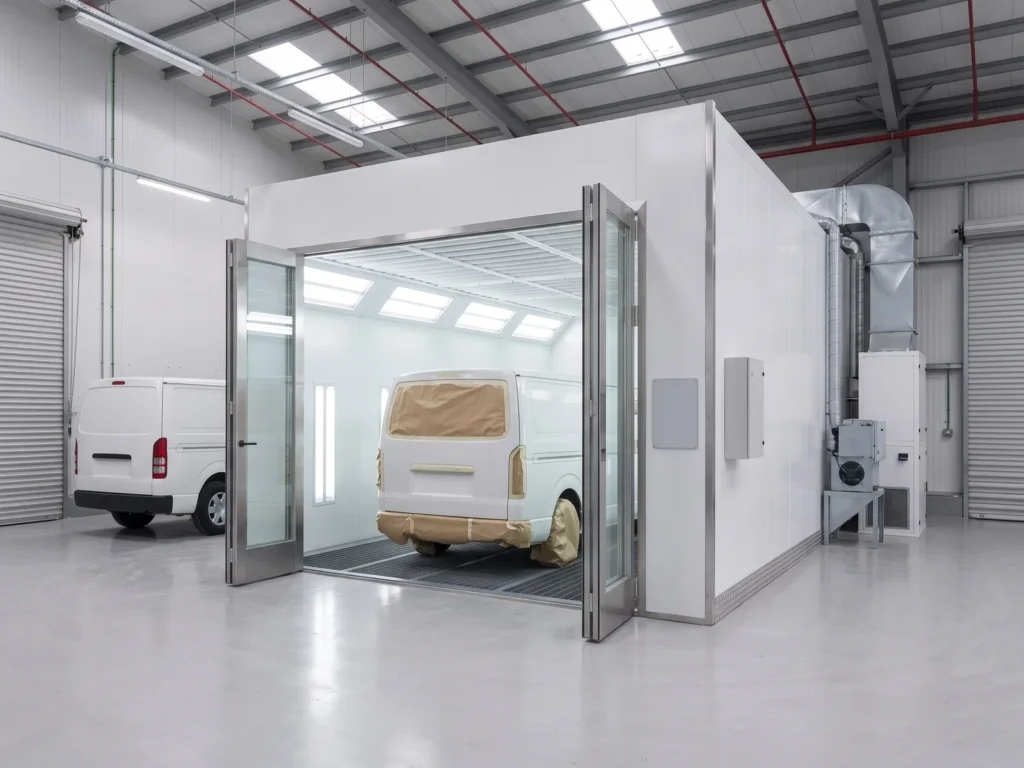
Paint Booths & Finishing Systems
In-house refinishing: keeping livery colours consistent and repairing operational wear without sending vehicles out.
INTECH chamber 6,900 × 4,000 × 2,650 mm — custom builds to 24,000 mm long Family details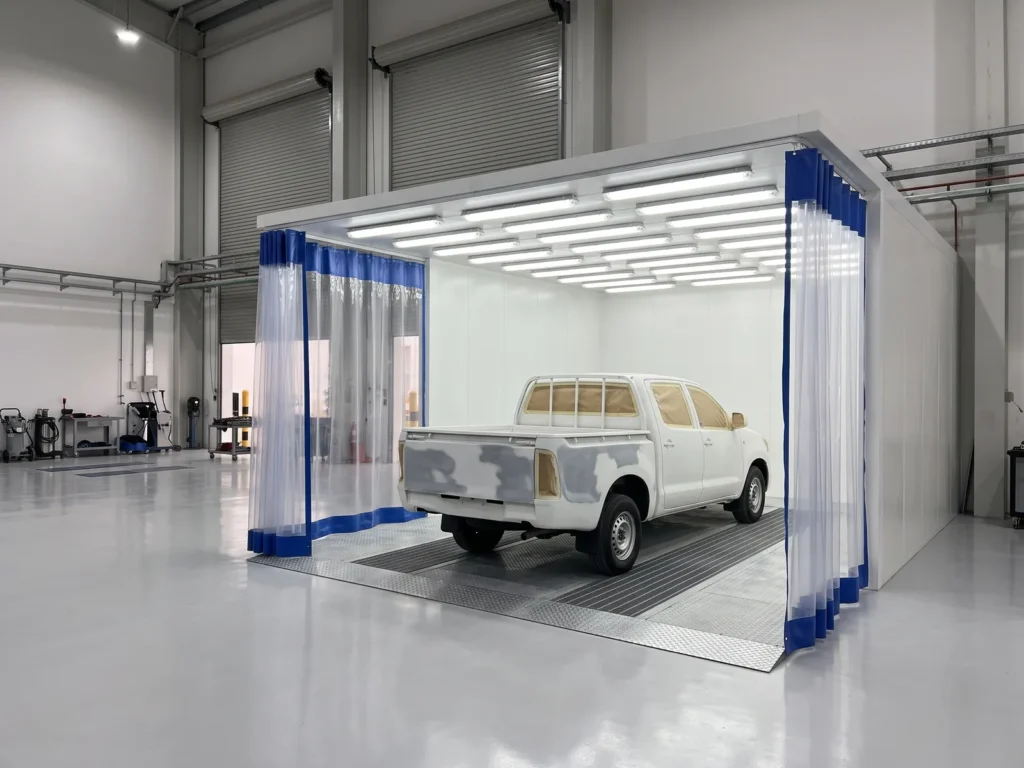
Prep Stations & Mixing Rooms
Surface preparation before refinishing — what makes a repaint last instead of repeat.
15,000 m³/h air capacity at 800 Pa · PURE 200 and PURE 120 Family details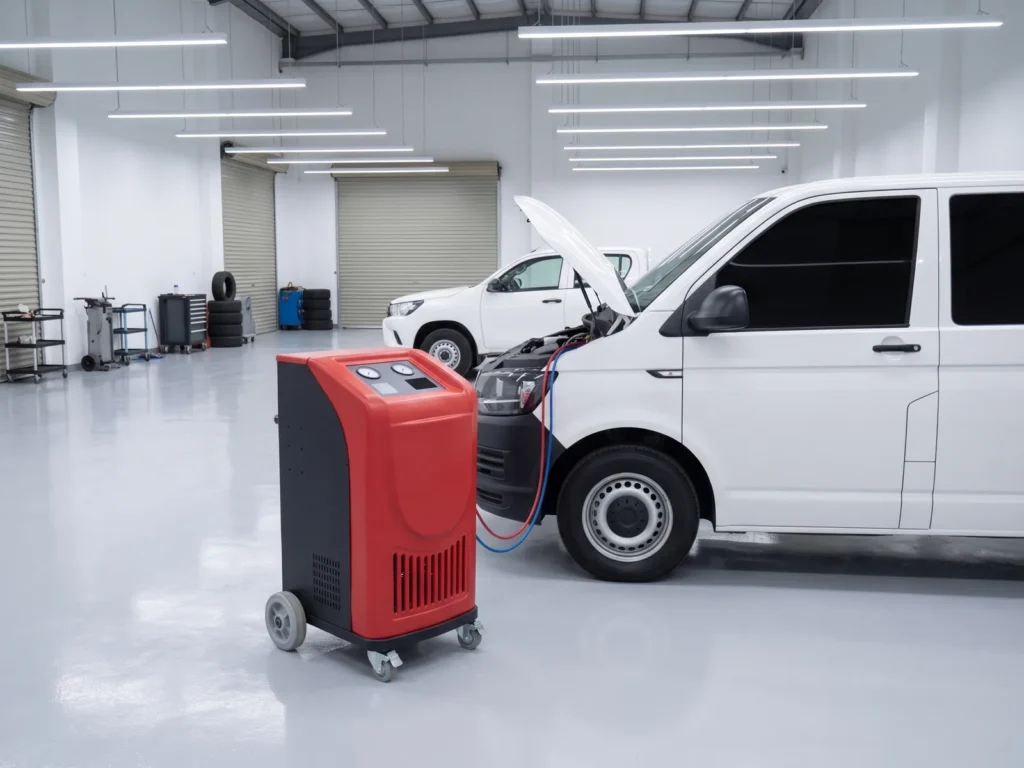
AC Service Stations
Vehicle A/C service — a recurring maintenance item in Saudi fleet operation.
120 L/min vacuum pump · 2 kg/min recharge · R134a and R1234yf (ACMAS301) Family details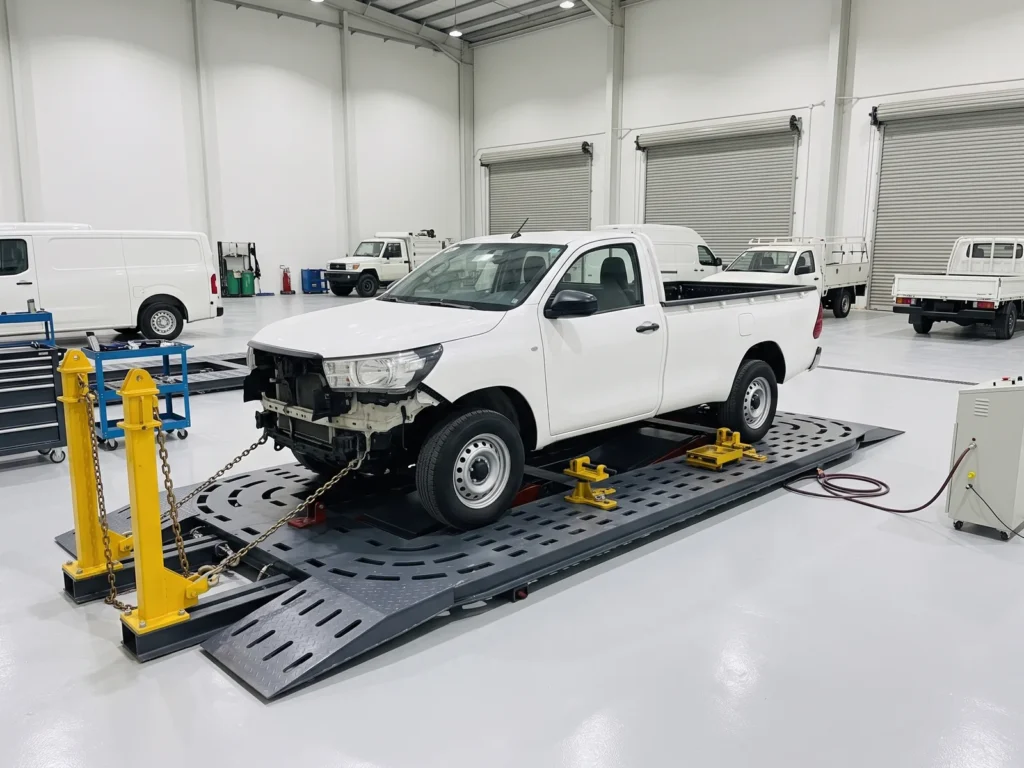
Chassis Pullers & Body Repair Equipment
Repairing structural damage in the central workshop instead of keeping the vehicle out of service for longer.
Two to four pulling towers across the INTECH CR models Family detailsConfiguration notes
What actually changes for this sector
Configuration — not product identity — is the real difference between sectors.
| Item | Range / value | Why it changes for this sector |
|---|---|---|
| Lift capacity range | 1,200–4,500 kg depending on the published model | A mixed fleet includes passenger and light commercial vehicles, so the range is built on the heaviest unit, not the average. |
| Bays dedicated to preventive maintenance | Set per project | Without dedicated bays, breakdowns displace scheduled work and the schedule that fleet operation depends on collapses. |
| Required lift height | 600–1,999 mm lift height depending on the published model | Underbody work in fleets is a daily repeat, and a comfortable working height shortens job time across thousands of cycles. |
| Filter replacement schedule | By running hours, and it differs between the primary, ceiling and floor filters — filters are typically replaced twice a year as part of preventive maintenance | Fleet vehicles run long, dusty routes and arrive carrying a heavier dust load than usual, which shortens filter life accordingly. |
| Booth dimensions | INTECH chamber 6,900 × 4,000 × 2,650 mm — custom builds to 24,000 mm long | Bus and commercial fleets exceed the automotive size envelope, so the booth is built to measure instead of buying a model the vehicle cannot enter. |
| Documentation requirements | Set per project | Government and commercial operating contracts require proof of work done, so documentation belongs in the fit-out rather than after it. |
Regulatory and site considerations
- SASO conformity for imported equipment.
- Professional workshop requirements: ventilation, cooling, lighting and waste handling.
- Fire and safety requirements in fleet workshops and in oil and fuel storage areas.
- Documentation and asset-tracking requirements in operations and maintenance contracts.
- Operator and tender requirements are set per project, and we match the supply to them before execution.
Frequently asked questions about this sector
Our fleet is mixed — how do we choose lift capacity?
From the heaviest vehicle in the fleet, not the average. Published lift capacities run from 1,200 to 4,500 kg, and a mixed fleet usually needs more than one rating spread across different bays rather than a single rating everywhere.
Can a fleet workshop be fitted into an existing warehouse?
Usually yes, and four numbers decide it: clear height, slab thickness, available voltage and air pressure. The minimum surface-mount depth on our scissor models starts at 125 mm, which widens the options in existing buildings.
Do you support purchasing through tenders and government contracts?
We produce written technical specifications that can be placed directly into a tender document, together with the required conformity data. Registration and pre-qualification procedures with government entities are handled per tender according to its requirements, and you can send the conditions document or bill of quantities through the Government Procurement Request Centre.
Does a fleet workshop need a paint booth?
It depends on whether the fleet carries a livery and takes recurring operational damage. Fleets that refinish in-house keep livery colour consistent and shorten time out of service; anything beyond the automotive size envelope is built as a custom booth.
What is the maintenance and support scope after installation?
An extendable annual maintenance contract covers the equipment after installation; spare parts and filters for the equipment we supply are held in our warehouse, and anything not in stock is sourced within days. Service requests are prioritised by the impact of the downtime on your fleet.
Want to shorten time back to service?
Send us your fleet mix, vehicle count and available workshop area, and we will come back with a bay layout and an equipment list built around fleet availability, not around a catalogue page.