
The cheapest machine in a quotation is not always the cheapest machine to own. What separates them is a question that rarely gets asked at purchase: how long does a part take to arrive?
Industrial equipment spare parts availability is the specification that never appears in a specification sheet, and the one that decides how much downtime a fault turns into.
The published position
Stated plainly on the spare parts and filters page: parts and filters for equipment we supply are held in our warehouse, and anything not in stock is supplied within days.
The same page states the selection principle behind it — equipment is judged before purchase by one question: can we service it after the sale? That is a supplier constraint applied upstream of the catalogue, and it is why the parts position exists at all.
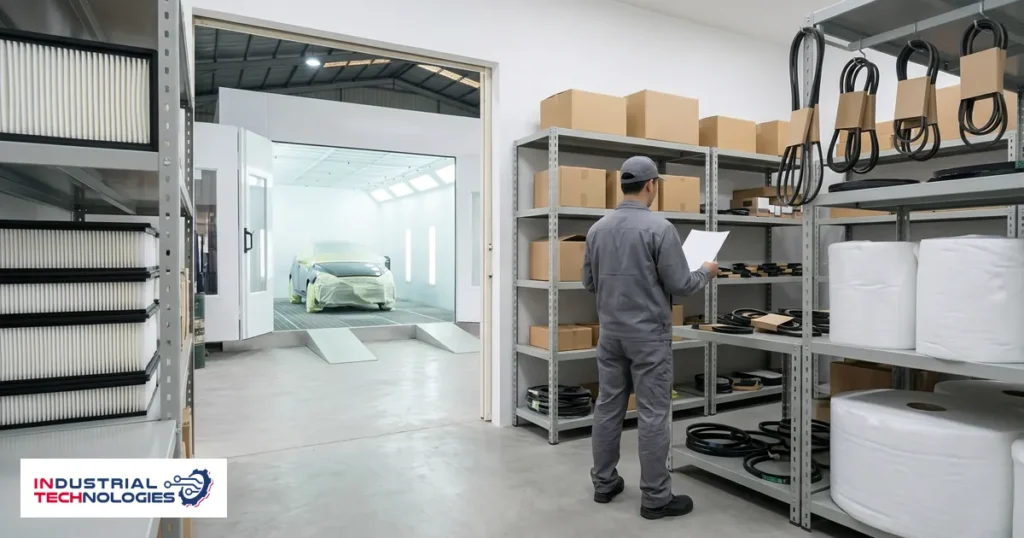
What is held covers mechanical and electrical parts for supplied equipment: fans, dampers, exchangers and control circuit components.
Matching by model, not by description
The longest phase of any parts request is the one spent identifying the part in words. Our supply record carries your equipment model, so the part is ordered by its number rather than by its description.
For that to work from your side, keep the model and supply date of each machine somewhere the person raising the request can reach — not in one individual’s file. That single piece of housekeeping shortens more requests than any amount of additional stock.
The published process is three steps: identify the part from model and description or photograph, confirm availability, then deliver or install with a service visit if removal is required.
The limits are published, not implied
An honest boundary is more useful for planning than an open promise, and three are stated directly.
The path follows the catalogue we supply rather than the parts market generally. Parts are not sold for equipment outside our supply — there is no record for it and no guaranteed match — except under an existing annual maintenance contract with a large company or dealership, where the contract defines scope and responsibility.
And parts that a manufacturer restricts to its official agent are ordered through that agent, with our role being follow-up rather than supply.
What to stock yourself
Given a published position of warehouse stock plus days for the rest, your own holding narrows to what cannot wait days.
Consumables on a known schedule come first — filtration is replaced typically twice a year within preventive maintenance, according to running hours, differing between pre-filter, ceiling filter and floor filter. Peak season is when a gap costs most.
Then rank the rest by consequence rather than by price: what stops the whole shop against what stops one bay. That ranking is also what determines call priority, since fault reports are ordered by their impact on your operation — equipment completely stopped precedes a planning request.
The published availability position
What is held, what is supplied, and what you stock yourself:
| Item | Published position |
|---|---|
| Held in stock | Parts and filters for equipment we supply are held in our warehouse |
| Everything else | Supplied within days |
| The request process | Identify the part from model and description or photograph · confirm availability · deliver or install with a service visit if removal is required |
| Local-stock consumables | Balancing weights, tire-changer protectors and reflective targets — a different stocking logic to a control component ordered once every few years |
| What you hold yourself | Only what cannot wait days |
Common questions
Is installation included in the part price?
No. Installation is a separate item from the part price, quoted with the request. Parts requiring removal are delivered or fitted during a service visit.
Is there a published price list?
No. Price follows model, quantity and lead time, and is given in a quotation rather than a list.
What about consumables for tire and wheel equipment?
The tire and oil service family publishes supply of consumables — balancing weights, tire-changer protectors and reflective targets — from local stock, which is a different stocking logic to a control component ordered once every few years.
What to send with your enquiry
Your equipment list with models and supply dates, daily running hours, and what stopped in the last twelve months. Then request a quotation for a stocking plan matched to your machines.