
In rental, a vehicle earns while it is rented — not while it is in the workshop
Faster turnaround between rentals.
Between one renter and the next there is an inspection, a clean-up and minor damage work. Every hour spent there is an hour the vehicle is not rented — and the constraint is the design of the inspection lane, not how fast the technicians move.
Operational challenges
What stalls production in this sector
The challenges that recur in the rental sector.
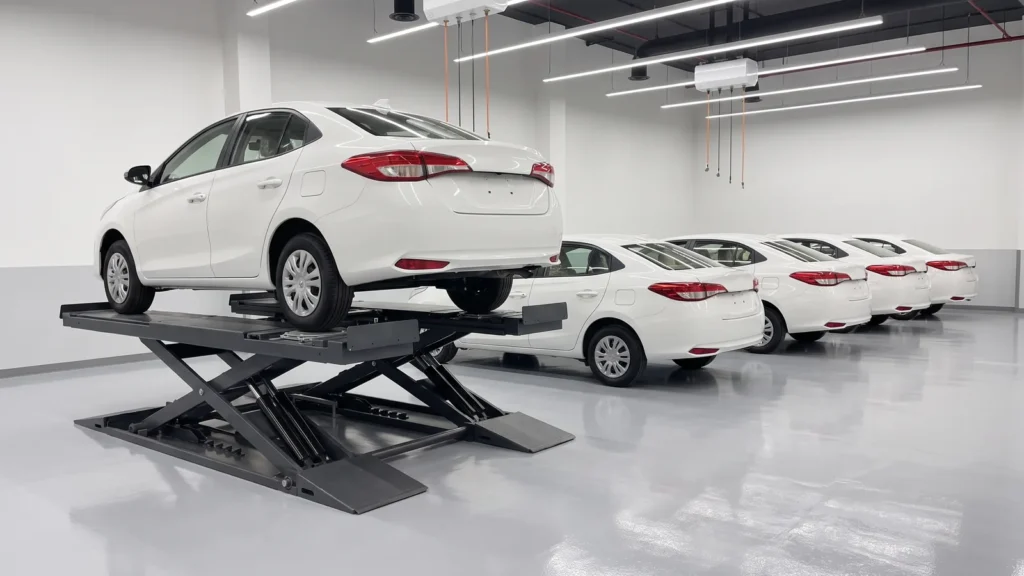
Turnaround time is the product itself
The rental model runs on fleet utilisation. A vehicle that spends two days in inspection and remedial work instead of half a day drags utilisation down across the whole fleet, not just that unit.
Small recurring damage eats the margin
Scratches and bumper or edge impacts are the most frequent damage in a rental fleet. Sending them to an outside shop doubles downtime and turns a containable cost into an external invoice.
Between-rental inspection needs a lane, not a bay
A quick check of tires, brakes, underbody and A/C repeats thousands of times a year. Designing it as a sequential lane of short-cycle bays is a completely different thing from putting the car into a general workshop.
A/C is an inspection item, not a repair item
In the Saudi climate, weak air conditioning means an immediate renter complaint and a reputational hit. A/C checking belongs in the routine inspection lane, not in the reported-fault list.
Vehicle condition is documented twice per cycle
Both handover and return need condition documentation that protects the company and the renter. A properly lit inspection area is not a luxury but a dispute tool, and its absence shows up in claims, not in the workshop.
Our approach
How each challenge is addressed
At the level of approach and configuration — before any product is named.
We design an inspection lane, not a general workshop. Sequential short-cycle bays, each with a defined function, so the vehicle passes through once and comes out rentable instead of shuttling back and forth inside the hall.
We bring small damage work in-house. A paint booth and prep station sized to your fleet turn a scratch from a vehicle grounded for days into one that returns to rental within a short, measured cycle.
We place A/C as a station inside the lane. The A/C service station sits inside the inspection lane rather than in a separate workshop, because the check is short and frequent and does not justify moving the vehicle elsewhere.
Equipment is chosen on cycle count, not capacity. A lift on an inspection lane goes up and down dozens of times a day. The selection criterion is endurance and rise/descend time, not a maximum capacity that will never be used.
Recommended equipment
Configurations that serve this sector
Listed as we actually supply them — nothing appears here unless we serve this sector with it.
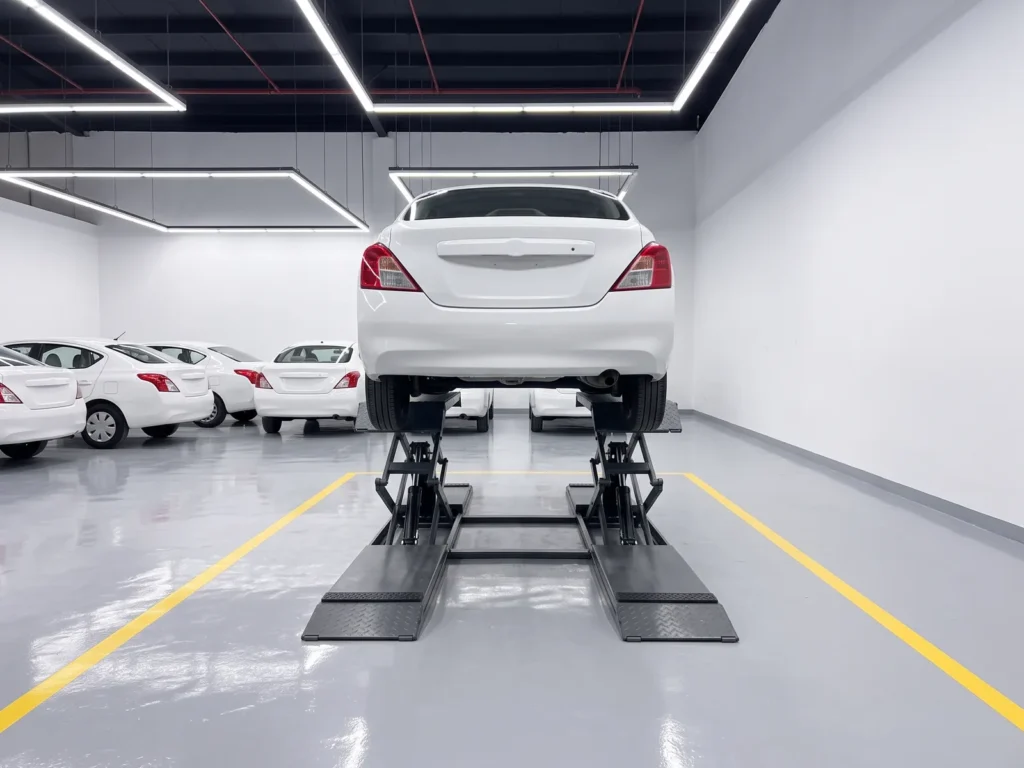
Vehicle Lifts & Lifting Equipment
The express inspection lane: 50 s rise and 30 s descend on the published models — the numbers that set the check cycle.
1,200–4,500 kg capacity · 600–1,999 mm lift height · 2.2–3 kW Family details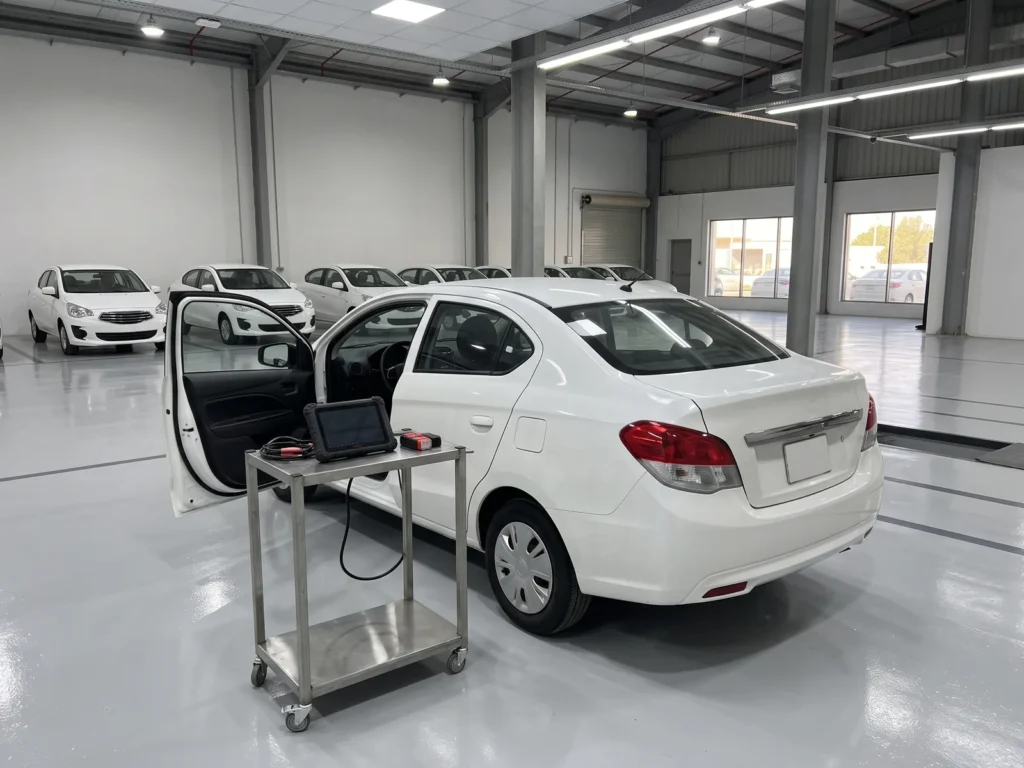
General Workshop Equipment & Tooling
Diagnostics and shop tooling for between-rental checks and vehicle condition documentation.
Scan and programming for 1996-onward vehicles (MS906 MAX) · ADAS PRO calibration Family details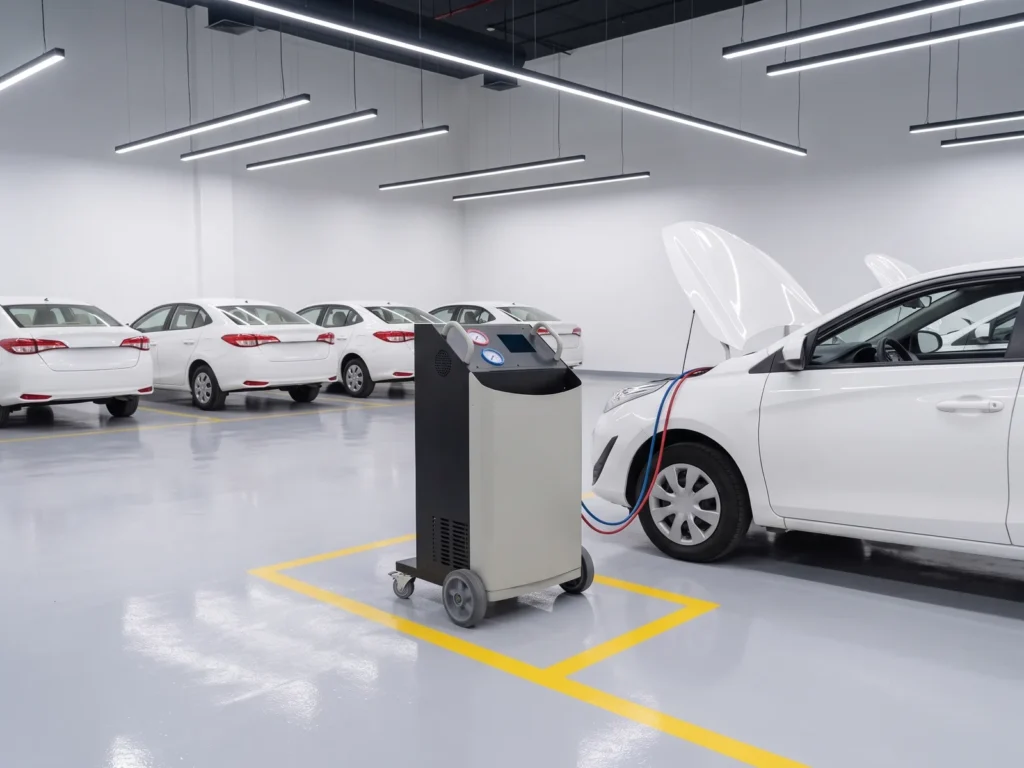
AC Service Stations
An A/C service station as a fixed stop on the inspection lane, not a repair triggered by a complaint.
120 L/min vacuum pump · 2 kg/min recharge · R134a and R1234yf (ACMAS301) Family details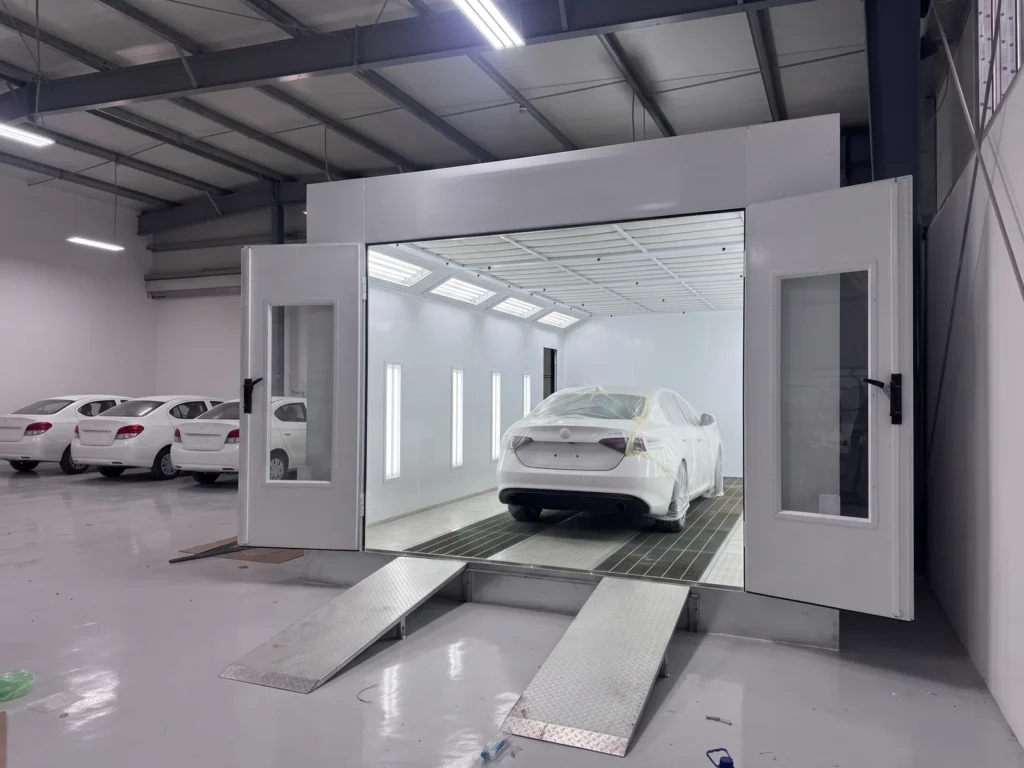
Paint Booths & Finishing Systems
Handling scratches and light damage in-house instead of routing the vehicle to an outside shop.
INTECH chamber 6,900 × 4,000 × 2,650 mm — custom builds to 24,000 mm long Family details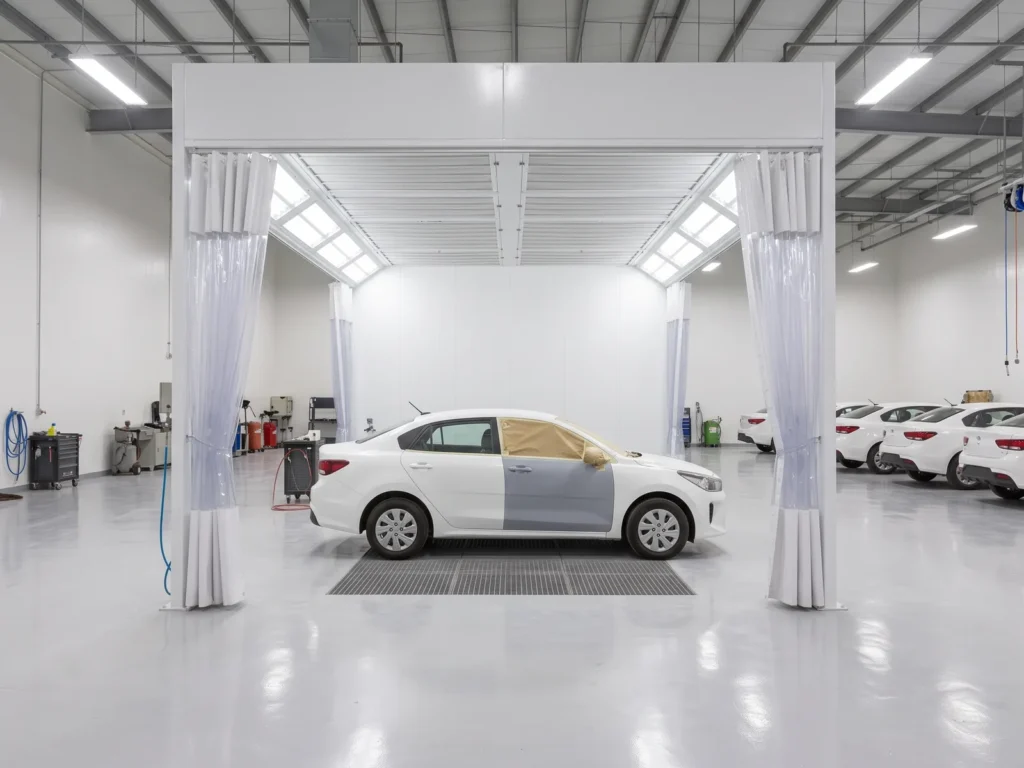
Prep Stations & Mixing Rooms
Surface prep before spot refinishing — what stops the same panel coming back twice.
15,000 m³/h air capacity at 800 Pa · PURE 200 and PURE 120 Family details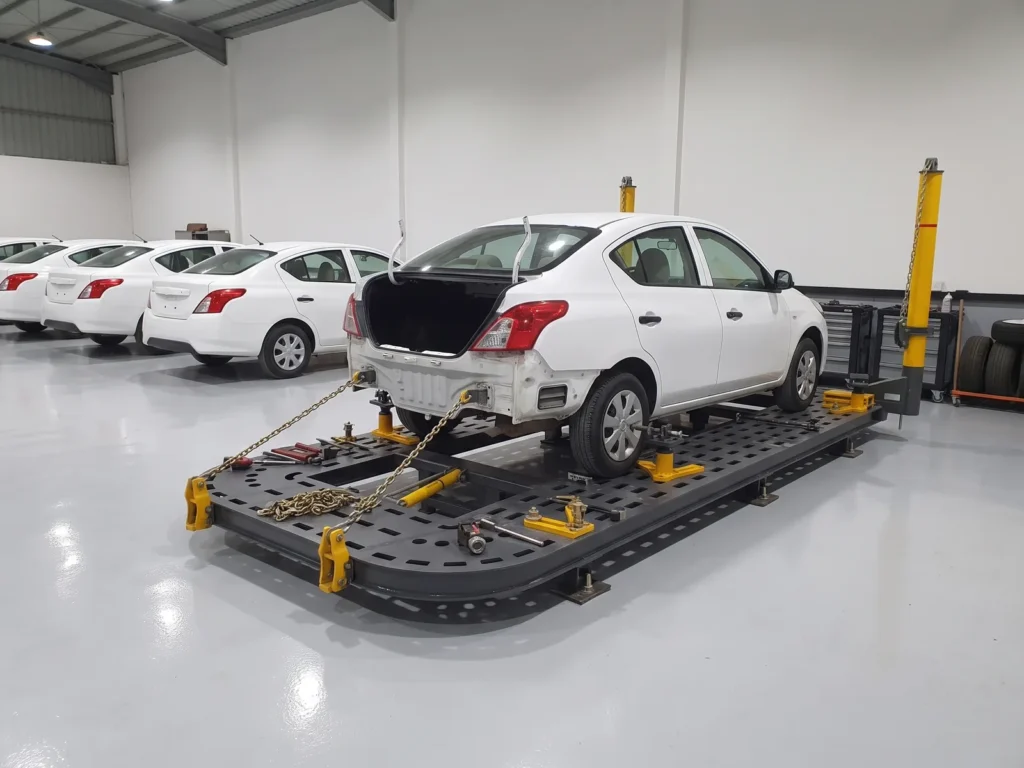
Chassis Pullers & Body Repair Equipment
Structural damage beyond spot refinishing, handled inside your own facility.
Two to four pulling towers across the INTECH CR models Family detailsConfiguration notes
What actually changes for this sector
Configuration — not product identity — is the real difference between sectors.
| Item | Range / value | Why it changes for this sector |
|---|---|---|
| Target inspection cycle time | Set per project | In rental, a fit-out is judged by turnaround time rather than job count, and the number and layout of stations derive from that time. |
| Number of lane stations | Set per project | A sequential lane stops the shuttling that consumes more time in rental centres than the actual work does. |
| Rise and descend time | 50 s rise and 30 s descend on the published models | A lift on an inspection lane runs dozens of cycles a day, so cycle time itself becomes a line in the calculation rather than a technical detail. |
| Booth capacity | INTECH chamber 6,900 × 4,000 × 2,650 mm | A rental fleet is predominantly passenger cars, so the standard chamber fits and the priority becomes cycle time rather than chamber size. |
| Inspection area lighting | Set per project | Condition documentation at handover and return is a dispute tool, and inadequate lighting undermines it exactly when it is needed. |
| A/C service capacity | ACMAS301: 120 L/min vacuum pump, 2 kg/min charging · ACMAS302: 2 kg/min charging, 60 L/min vacuum | In the Saudi climate, A/C checking is a routine item in every rental cycle rather than a service requested after a complaint. |
Regulatory and site considerations
- SASO conformity for imported equipment.
- Professional workshop requirements: ventilation, cooling, lighting and waste handling.
- Fire and safety requirements in inspection, storage and wash areas.
- Pre-installation site requirements: available voltage, slab thickness, clear height and air pressure.
- Municipal requirements for a rental fleet service centre are set per project by its location, and we review them with you before execution.
Frequently asked questions about this sector
Is an in-house paint booth worth it for a rental centre?
It depends on how many minor damage cases you see monthly and how much downtime they cause today. If scratches and light impacts ground vehicles for days waiting on an outside shop, an in-house booth turns that into a measured internal cycle. Send us your monthly case count and we will work through it with you.
How does equipping a rental centre differ from a normal workshop?
A service workshop is designed around the long job; a rental centre is designed around short repetition. The first needs bays that absorb hours; the second needs sequential short-cycle stations the vehicle passes through once and leaves rentable.
How long does a between-rental check take?
The time is set by lane design rather than by equipment alone: the number of stations, their sequence, and lift cycle time. Rise and descend on our published models are 50 s and 30 s, and that figure feeds straight into the inspection cycle calculation.
Do you supply A/C service equipment?
Yes. A/C service stations are a distinct family in our catalogue and serve the rental sector directly. The right specification depends on how many vehicles you handle per day and the refrigerant your fleet uses.
We lease our building — does that limit our options?
It narrows them but does not close them. Four numbers matter: clear height, slab thickness, voltage and air pressure. The scissor models run on 220 V single-phase with a minimum surface-mount depth of 125 mm, which makes them the closest fit in leased buildings.
Want to raise fleet utilisation?
Send your vehicle count, average monthly rental cycles and facility area, and we will come back with an inspection-lane design and an equipment list built around the turnaround time you are targeting.