
Collision repair is won on the shop floor, not on the estimate
From booth to calibration.
A car leaving your shop has to leave with a matched colour, a straight shell, and its electronics reading the road the way the manufacturer designed. Three conditions — and any one of them failing brings the car back on your account.
Operational challenges
What stalls production in this sector
The challenges below span five categories: throughput, space, safety, technology and compliance.
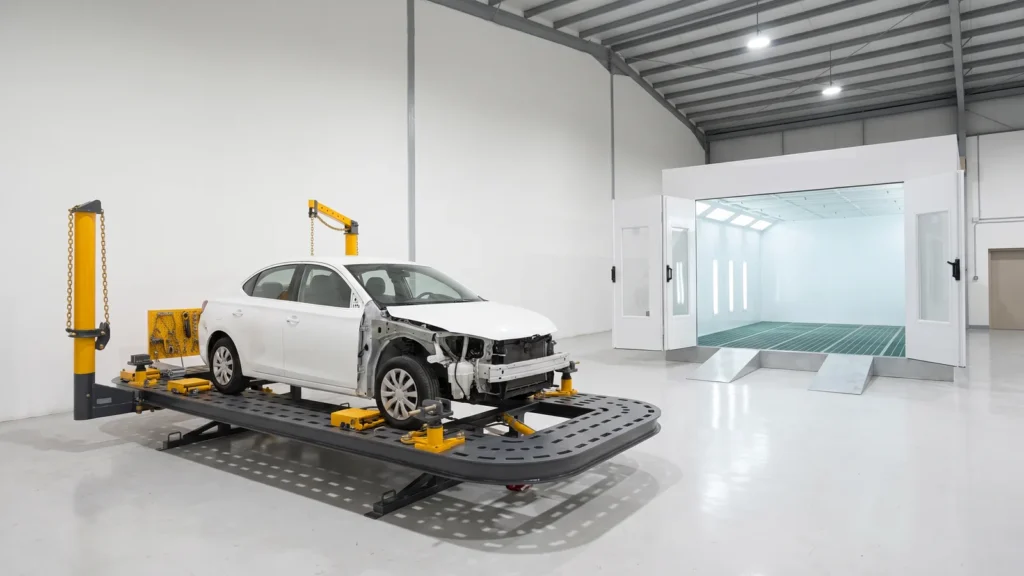
The booth is the bottleneck
If the first car cures late, the whole shop queues behind it. In a busy body shop, booth capacity and heat curve set the number of cars delivered per day — not the number of panel beaters.
Dust ruins the coat from the middle out
The regional climate is dusty, and spraying outside a controlled environment traps contamination that only shows after curing. A shop that controls its air and filtration redoes less work than one that rushes the coat.
A collision is no longer just metal and paint
Modern vehicles carry sensors and cameras mounted in bumpers, glass and mirrors. Any structural repair shifts their geometry, and handing the car back without recalibration means handing back a car that misreads the road.
Floor space gets spent moving cars, not repairing them
Damaged cars mixed with finished ones, and no separation between fast repair and structural work, turn half the shop’s day into manoeuvring. The workflow — intake, strip, structure, prep, paint, reassembly, calibration, delivery — needs planning, not improvisation.
Compliance comes before the budget
Ventilation and fire systems, paint and solvent waste disposal, and professional workshop requirements all enter the fit-out decision before the budget does. A fit-out that ignores them is rebuilt after installation.
Our approach
How each challenge is addressed
At the level of approach and configuration — before any product is named.
A booth is not one size. We start from the vehicle types entering your shop and from the largest of them, then size the chamber, heat curve and filtration around your real workload — not around the largest model in the catalogue.
Prep before spray is a step, not a luxury. The prep and mixing room is what keeps dust off the panel before it enters the booth. We place it inside the workflow so it directly precedes the booth, not in a leftover corner away from it.
Structure first, then paint. The chassis puller re-establishes structural geometry before any coating goes on. Reversing that order produces a nicely painted car on a bent shell — the most expensive rework a body shop can do.
Calibration is a delivery step, not an outsourced service. We plan a level, well-lit, dedicated area for an ADAS calibration platform so calibration becomes a step inside your own workflow and its margin stays with you.
Recommended equipment
Configurations that serve this sector
Listed as we actually supply them — nothing appears here unless we serve this sector with it.
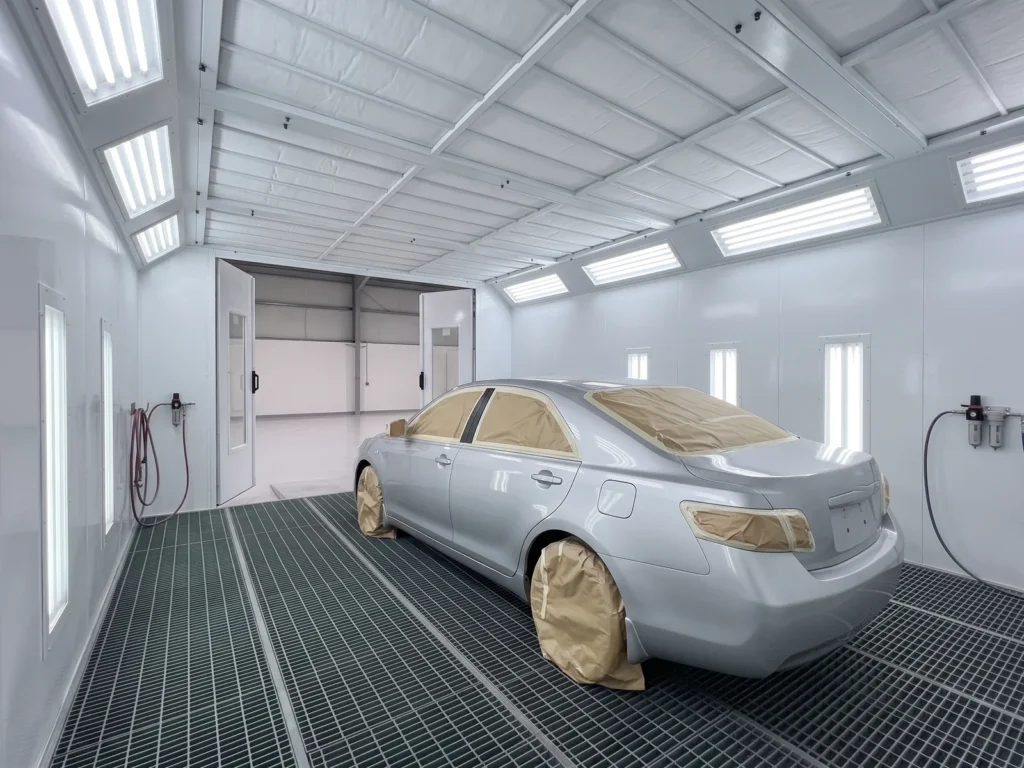
Paint Booths & Finishing Systems
Controlled curing is what makes colour and gloss consistent, and booth capacity is your daily delivery ceiling.
INTECH chamber 6,900 × 4,000 × 2,650 mm — custom builds to 24,000 mm long Family details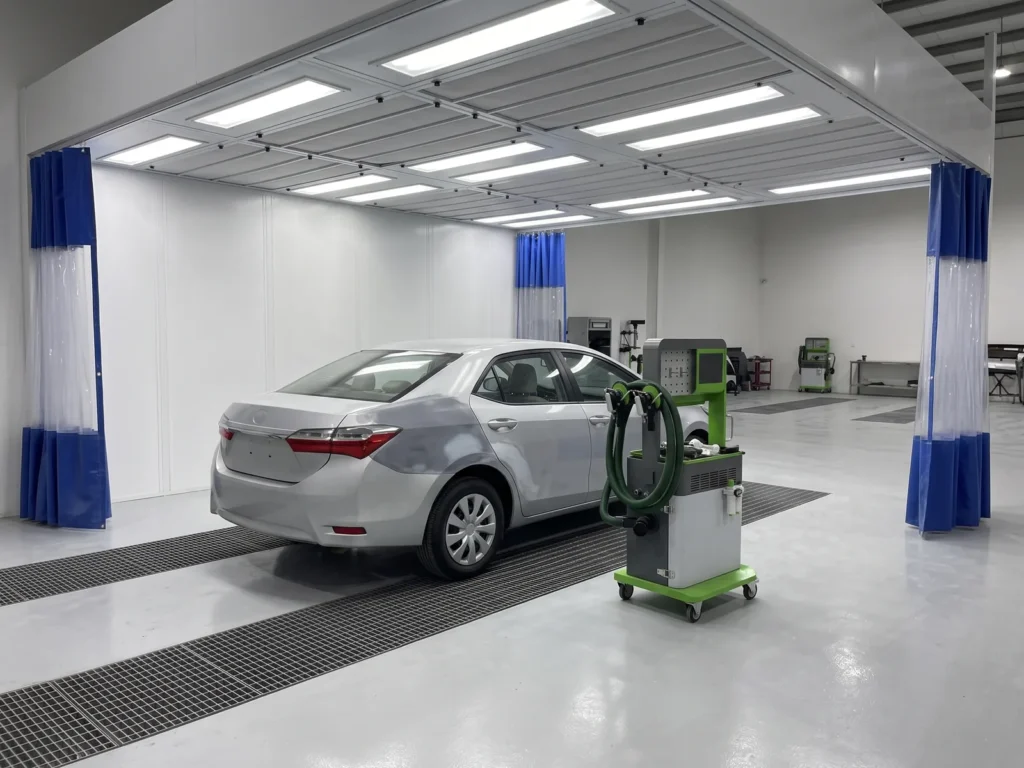
Prep Stations & Mixing Rooms
A clean surface before spraying in a dusty climate — the step most often skipped, and most often the reason paint is redone.
15,000 m³/h air capacity at 800 Pa · PURE 200 and PURE 120 Family details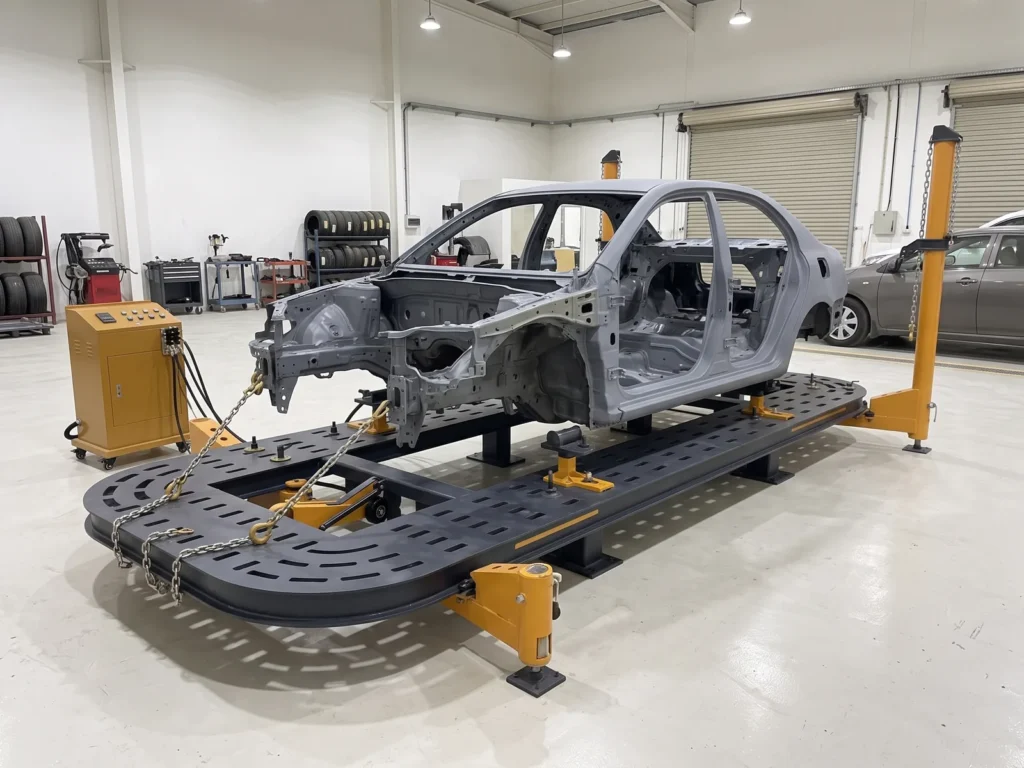
Chassis Pullers & Body Repair Equipment
Re-establishing the shell’s geometry before coating, with pulling towers working on the anchored vehicle.
Two to four pulling towers across the INTECH CR models Family details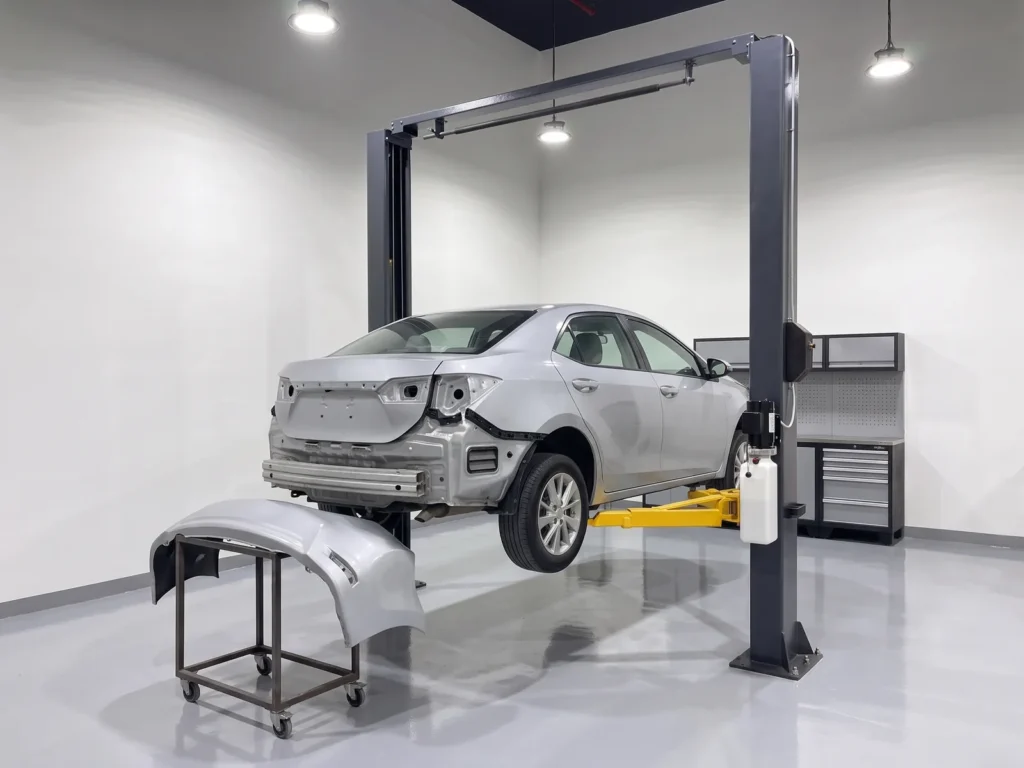
Vehicle Lifts & Lifting Equipment
Mechanical and electrical work inside the body shop, without sending the car out to another workshop.
1,200–4,500 kg capacity · 600–1,999 mm lift height · 2.2–3 kW Family details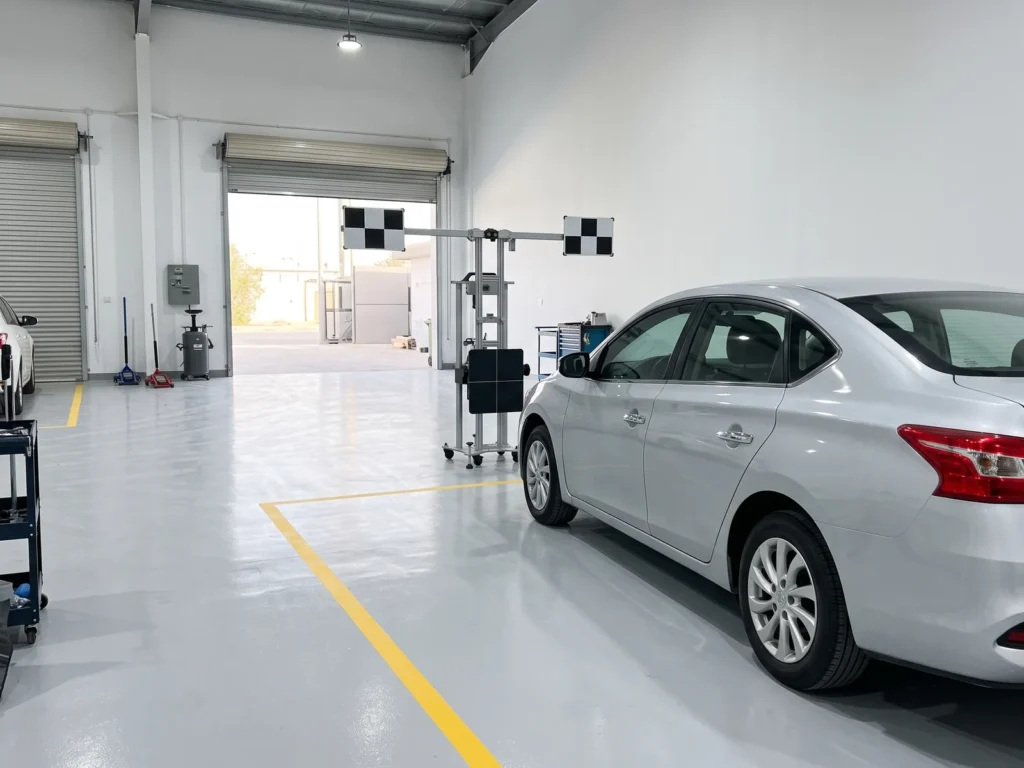
General Workshop Equipment & Tooling
Diagnostics, an ADAS calibration platform and general shop tooling — including ADAS PRO.
Scan and programming for 1996-onward vehicles (MS906 MAX) · ADAS PRO calibration Family detailsConfiguration notes
What actually changes for this sector
Configuration — not product identity — is the real difference between sectors.
| Item | Range / value | Why it changes for this sector |
|---|---|---|
| Booth chamber dimensions | INTECH chamber 6,900 × 4,000 × 2,650 mm — custom builds to 24,000 mm long | Sized to the largest vehicle that passes through, not the average, because a single vehicle that will not fit stalls the entire workflow. |
| Chassis puller anchoring | Two to four pulling towers across the INTECH CR models | Pulling equipment needs a slab that can take the loads, and an anchoring plan reviewed before installation rather than after. |
| Calibration area | Set per project | ADAS calibration needs a level floor, clear distance in front of the vehicle and controlled lighting — space requirements, not device requirements. |
Regulatory and site considerations
- Ventilation and fire systems in the spray hall and solvent storage areas.
- Disposal of paint and solvent waste under the applicable environmental requirements.
- SASO conformity for imported equipment.
- Non-conflicting internal routes: intake, strip, structure, prep, booth, reassembly, calibration, delivery.
- Municipal licensing requirements for a body shop depend on its location, and we review them with you before execution.
Frequently asked questions about this sector
Are you a paint shop? I want my car resprayed
No. We sell spray booths; we do not spray cars. We take in no vehicles and offer no body or paint services. If you own or are building a body shop, we equip it with the booth, the prep station and the chassis puller.
What is the difference between a prep station and a paint booth?
The prep station is where sanding, cleaning and priming happen, and its job is to keep dust off the panel. The booth is where controlled-heat curing happens. A complete body shop needs both; running only one means paying for the missing one in rework.
Does every car need calibration after structural repair?
Any vehicle with sensors or cameras in the repaired area needs recalibration, because their mounting geometry has moved. A shop without calibration either hands back a vehicle whose systems were never verified, or sends the work — and its margin — elsewhere.
What booth size suits a body shop?
Start from the largest vehicle you take in. The INTECH models have an internal chamber of 6,900 × 4,000 × 2,650 mm, which covers sedans and SUVs; anything beyond that — a bus, a truck, an industrial part — is built as a custom booth within a range reaching 24,000 mm in length.
Can a chassis puller be installed on any floor?
No. A puller transfers substantial loads into the slab and needs adequate thickness, reinforcement and a considered anchoring plan. We review the floor with you before installation, because fixing it afterwards costs far more than checking it first.
How much does a car paint booth cost?
Price follows configuration: chamber size, air capacity, heat curve, filtration class and site requirements. Send the largest vehicle you take in and your hall dimensions through the quote form and you will get a proposal built around your shop.
Building or expanding a body shop?
Send us your hall dimensions, the largest vehicle you take in and your target cars-per-day, and we will map the workflow with you from intake to calibration before we talk price.