
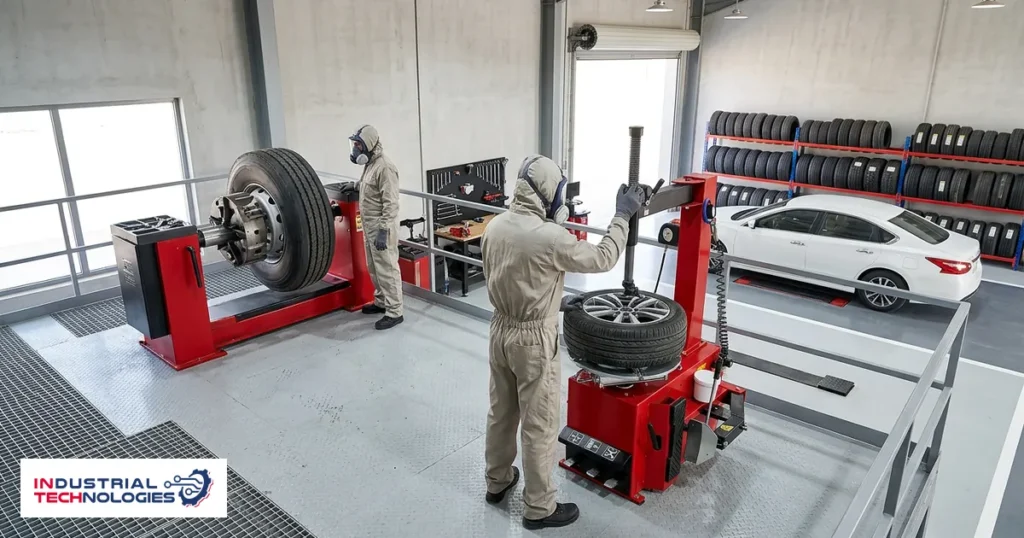
A tire change looks like the simplest job in the bay, which is why the machine that does it is so often chosen last and on price. The cost of that choice shows up on the rim: a scratched alloy wheel can cost the workshop more than the tire it was fitting.
Choosing a tire changer machine therefore starts from the wheels that actually arrive at the bay — their size, their rims and their tires — rather than from a general specification list.
Passenger or truck: decide before anything else
The published range separates the two classes explicitly, and the difference is in construction rather than size. For passenger and performance vehicles: a tilt-back column with dual pneumatic assist arms, rim protection for alloy and chrome wheels, and the ability to handle run-flat and low-profile tires. For commercial trucks and buses: an electro-hydraulic machine with powered lift and rotation for heavy wheel assemblies, and a wireless remote.
Those are not two sizes of one product. A workshop that serves both usually needs both, and a single machine asked to cover the two ends up either short of the largest wheel or larger than the daily work requires.
What the assist arms are for
On the passenger class the assist arms are not a convenience. A run-flat tire has a stiff sidewall that resists leaving the rim, and without mechanical help the technician falls back on a lever against the rim edge — which is exactly where the scratch comes from.
Rim protection on the mounting head, the assist arms and replaceable jaw covers work as one arrangement. Take any one of them away and the risk returns to the rim.
What is set by model
Rim size range and maximum wheel load vary by model and are set in the quotation. That is not a way of avoiding the numbers; it is how this class of equipment is bought, because a shop fitting passenger cars and a shop fitting pickups and light trucks need genuinely different machines at genuinely different prices.
Send the range of rim sizes you actually receive rather than asking for the largest available. The machine is selected on the largest size serviced daily, with a margin above it.
Air, power and floor space
- Compressed air — tire changers run on shop air, from a dedicated compressor or a central line; the pressure and flow each model needs are on its specification sheet
- Electrical supply — hydraulic truck changers require a three-phase supply, a line to confirm at the panel before the order rather than on installation day
- Floor space — the truck changer needs the widest footprint in the tire bay plus a crane path for handling heavy wheels
Space is the item most often underestimated. The machine occupies its own footprint, but the work needs more: room for the technician to move around a raised wheel, a path in and out for heavy assemblies, and somewhere for the finished wheel to wait before refitting.
The changer is one step of a cycle
Removing and fitting the tire is one step. Balancing follows, and wheel alignment sometimes precedes it. A bay with an excellent changer and a weak balancer sends the vehicle back to the road with a vibration it did not have before.
The same family publishes digital dynamic balancers with laser-guided weight placement and automatic rim dimension capture, and digital inflators with an automatic pressure purge and an internal moisture filter.
| Class | Published construction | What it handles |
|---|---|---|
| Passenger and performance | Tilt-back column, dual pneumatic assist arms, alloy and chrome rim protection | Run-flat and low-profile tires |
| Commercial truck and bus | Electro-hydraulic, powered lift and rotation, wireless remote | Heavy wheel assemblies, on a three-phase supply |
| Both classes | Rim size range and maximum wheel load set by model | Stated in the quotation |
Frequently asked
Does a workshop serving cars and trucks need two machines?
Usually, yes. The truck machine works hydraulically, lifting and rotating the wheel, which is a different logic from the tilt-back column. Combining both in one unit means a compromise on one of the two classes, and the decision follows the share of heavy wheels in the daily work.
What actually protects the rim?
Three things together: rim protection on the mounting head, assist arms that reduce reliance on a lever, and jaw covers replaced before they wear through. The covers are consumables to keep in stock, not parts ordered after the first scratch.
Are wear parts covered by the warranty?
The warranty is the manufacturer’s, on the term and conditions in its documents and the quotation, and it excludes consumables. Changer jaws are listed among the consumables for this family, so they belong in the running budget rather than in a warranty claim.
Is a price list published?
No. The price follows the model, the quantity and the delivery period, and it is given in a quotation, because rim range and maximum wheel load change the figure materially.
Related reading
Practical next step
Send the range of rim sizes you receive, the share of alloy rims, whether truck wheels come in, and the number of wheels a day. Request a Quote. The published classes sit under tire and oil service equipment.