
A service point inside a station works in small space and even smaller time
Fast service in limited space.
A driver who pulled in for fuel will not wait an hour for an add-on service. A service point inside a station lives on short repeat jobs, and any equipment that lengthens the cycle empties the place of its purpose.
Operational challenges
What stalls production in this sector
The challenges that recur at fuel stations.
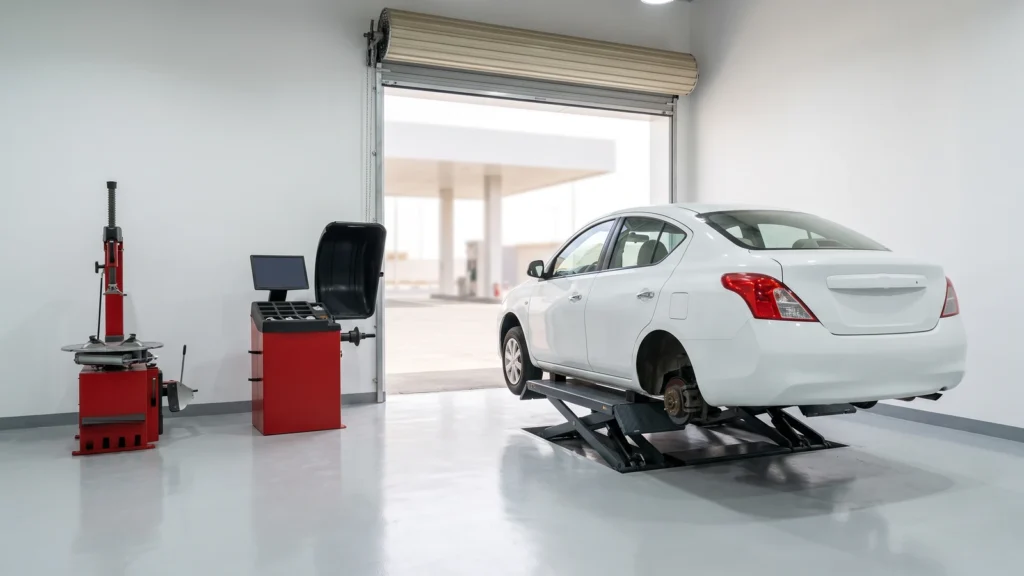
Space is limited and governed by the fuel lane
A service point inside a station has no room for a wide hall and must not obstruct the pump lane. Every equipment decision here is a space decision first.
The job is short or it does not happen
The visitor came for fuel; an added service earns minutes, not hours. Anything that requires keeping the vehicle for long does not suit this location, whatever its margin.
A fuel environment raises the safety bar
Fuel and vapours make fire, ventilation and zone-separation requirements stricter than in a standalone workshop, and they enter facility design before equipment selection.
Demand is seasonal and concentrated in peak hours
Service inside a station clusters into specific hours and travel seasons. Equipment is chosen for peak capability rather than daily average, or the queue becomes the product.
Operation by changing hands and uneven skills
Station teams change more often than workshop teams. Simple-to-operate, simple-to-service equipment lasts longer here than advanced equipment that needs a specialist.
Our approach
How each challenge is addressed
At the level of approach and configuration — before any product is named.
We start from the available area and the pump lane. We work out where a vehicle can stand without blocking refuelling, then choose equipment that fits that space — not the other way round.
Equipment is chosen on cycle time. Here, a lift that rises and descends quickly matters more than a high-capacity one. Our published models rise in 50 s and descend in 30 s, and that number belongs in the purchase decision at this location.
We work within the existing site’s power and air. Existing stations rarely have three-phase supply at the service point. Models that run on 220 V single-phase make the fit-out possible without re-running power.
We keep the equipment list short and deliberate. Fewer machines that run more is better than a long list with half of it down. We recommend only what short, repeat service needs; the rest belongs in a standalone workshop.
Recommended equipment
Configurations that serve this sector
Listed as we actually supply them — nothing appears here unless we serve this sector with it.
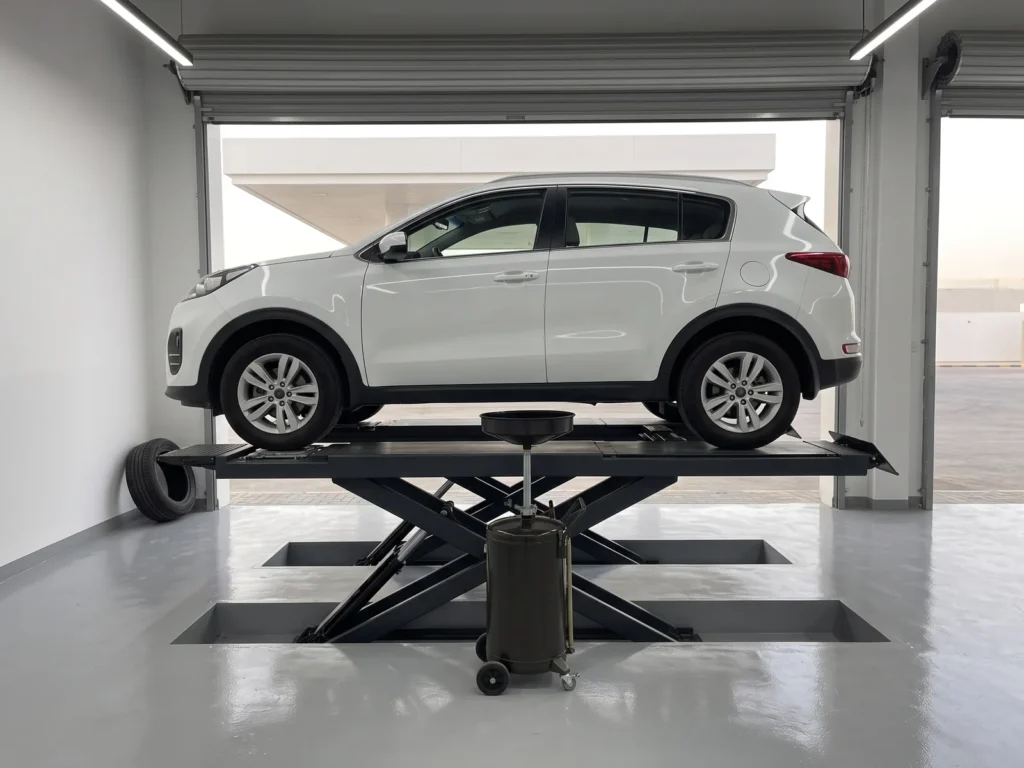
Vehicle Lifts & Lifting Equipment
Quick lifting for short service: underbody checks, oil and tire work within a short cycle.
1,200–4,500 kg capacity · 600–1,999 mm lift height · 2.2–3 kW Family details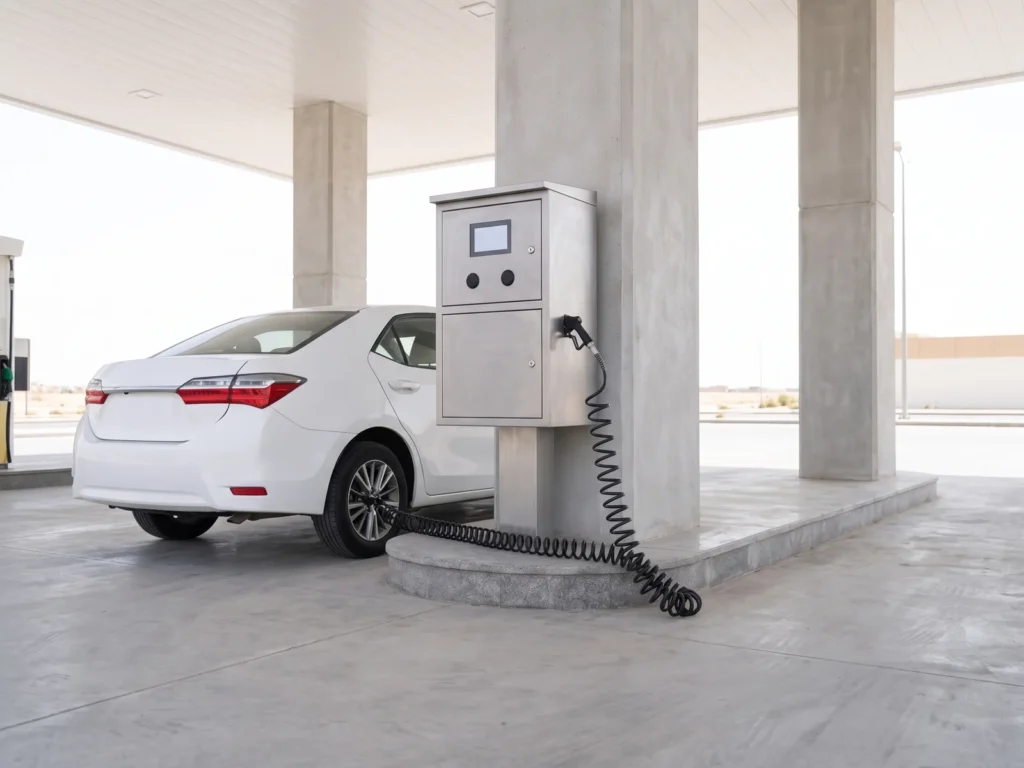
Fuel Station Equipment
Support equipment inside the station — including tire inflation, one of the most requested services on the pump lane.
Family detailsConfiguration notes
What actually changes for this sector
Configuration — not product identity — is the real difference between sectors.
| Item | Range / value | Why it changes for this sector |
|---|---|---|
| Available service area | Set per project | A service point works in whatever space is left after the fuel lane, so area is a constraint that precedes equipment selection rather than following it. |
| Service cycle time | 50 s rise and 30 s descend on the published models | The visitor came for fuel and the service earns minutes, not hours, so cycle time is a purchase criterion here rather than a technical figure. |
| Available voltage at the service point | 220 V single-phase 60 Hz for the scissor and platform models | Existing stations rarely have three-phase at the service point, and a single-phase model avoids re-running power. |
| Peak capacity | Set per project | Station demand clusters into hours and seasons, so equipment is sized to the peak rather than the daily average. |
Regulatory and site considerations
- Fire and safety requirements specific to a fuel and vapour environment.
- Separation of refuelling zones from service zones inside the station.
- SASO conformity for imported equipment.
- Pre-installation site requirements: available voltage, slab thickness, clear height and air pressure.
- Municipal and regulator requirements for a service point inside a station depend on its location, and we review them with you before execution.
Frequently asked questions about this sector
What equipment suits a service point inside a fuel station?
Whatever serves a short, repeating job: a lift that rises and descends quickly for underbody checks, oil and tire work, plus support equipment such as tire inflation. We supply two families to this sector: vehicle lifts and fuel station equipment.
Our station has no three-phase supply — can a lift still be installed?
Yes. The scissor models and the lifting platform in our catalogue run on 220 V single-phase at 60 Hz, which avoids re-running power in an existing station.
How much space does an in-station service point need?
It is worked out from where a vehicle can stand without blocking the pump lane, and from the separation required between fuel and service zones. Send us the station layout and we will define what is possible before discussing any model.
Do you supply tire and oil service equipment?
Yes. Within the tire and oil service family we supply wheel aligners, wheel balancers and tire changers, with the model selected per project through a quote request. Tire inflation sits within fuel station equipment.
Planning a service point inside your station?
Send the station layout and the area available clear of the pump lane, and we will come back with a short equipment list that performs at peak without obstructing refuelling.