
A dealership service centre is run on capacity, not on equipment count
We equip the centre as one line.
A dealership customer compares waiting time before comparing repair quality. When intake backs up, billable hours turn into complaints — and the cause is usually bay allocation and job-time standardisation, not the technicians.
Operational challenges
What stalls production in this sector
The challenges that recur in dealership service centres.
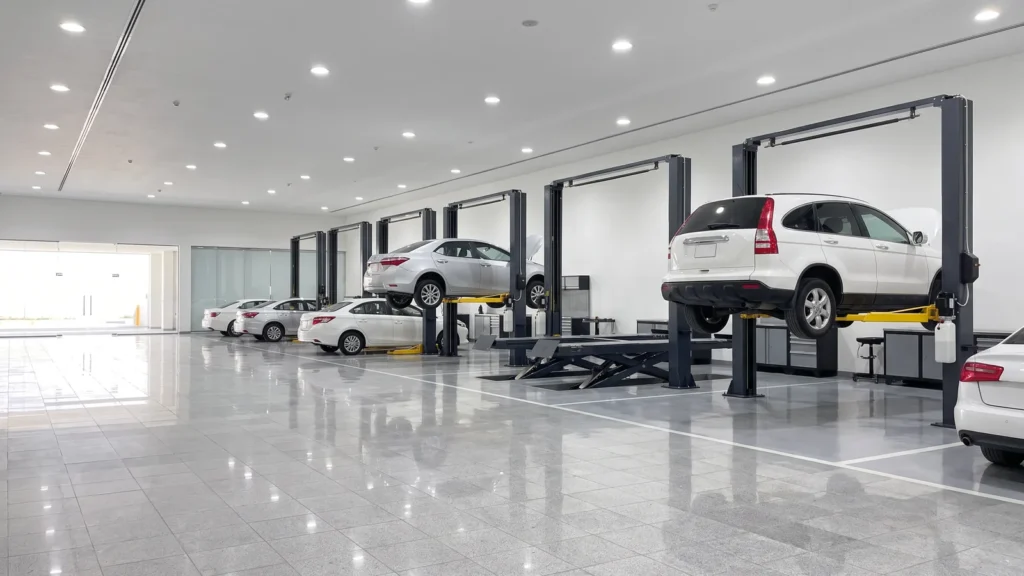
Scheduled-service volume backs up at intake
A large in-warranty parc makes scheduled servicing a fixed daily load. Without standardised job times and dedicated bays, intake turns into a queue and the customer into a complaint.
One building has to serve four different activities
Express service, heavy repair, storage and vehicle washing each run at a different rhythm. Mixing them in one space makes the short job wait behind the long one.
Continuous operation demands equipment built for repetition
A dealership cycles a lift dozens of times a day, six days a week. Equipment that suits a small workshop reaches end of life here in a fraction of the expected span.
EVs and safety systems change what the workshop needs
Servicing EVs calls for battery handling and an isolation area, and driver-assist systems need recalibration after any work that touches their geometry. Both add space requirements, not just device requirements.
Manufacturer standards and local compliance both apply
Manufacturer standards, process documentation and quality assurance are read alongside professional workshop requirements and SASO conformity, and the fit-out has to pass both.
Our approach
How each challenge is addressed
At the level of approach and configuration — before any product is named.
We plan the centre around the target bay count. We start from the vehicles the dealer wants to receive per day, derive the bay count from it, split those bays between express service and heavy repair, then choose lifts per bay type.
We separate the rhythms instead of mixing them. A short job does not belong in a long job’s lane. Separating express service from structural repair and refinishing raises capacity without adding total floor area.
Equipment is chosen on duty cycle, not capacity alone. Capacity is one number; daily cycles are another. In a dealership both are discussed together, alongside a preventive-maintenance schedule and critical spares, before purchase.
Calibration and battery handling get their space from day one. An ADAS calibration platform and an EV battery-lifting platform both need dedicated, level space. Allocating it at planning stage is far cheaper than finding it later.
Recommended equipment
Configurations that serve this sector
Listed as we actually supply them — nothing appears here unless we serve this sector with it.
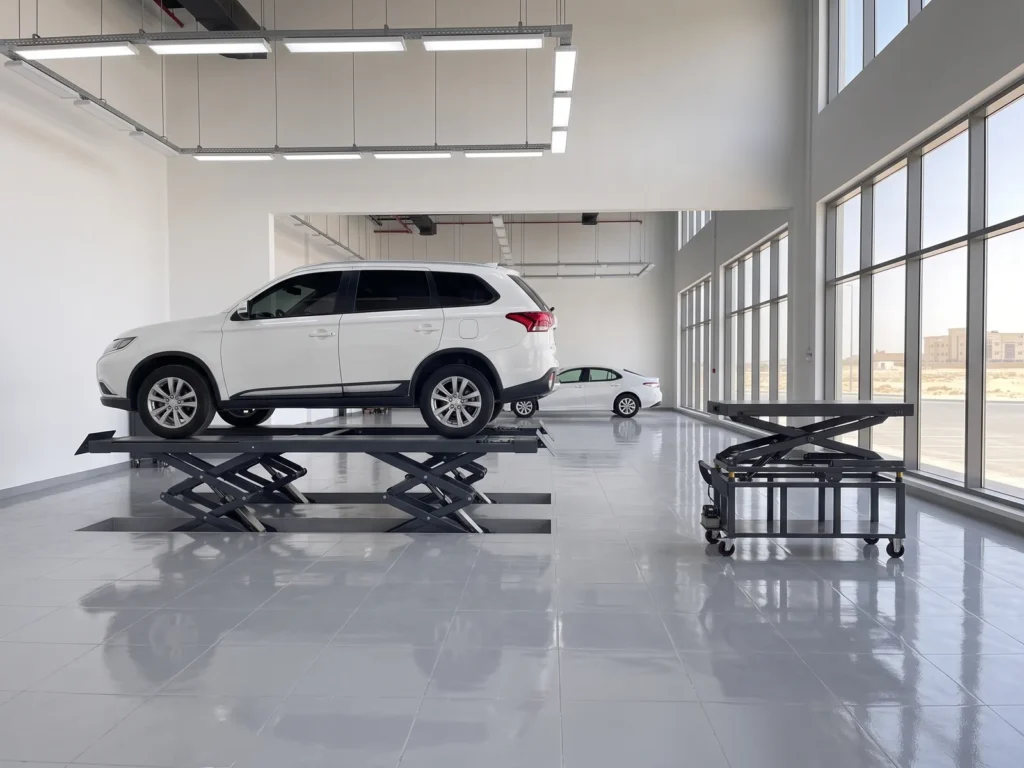
Vehicle Lifts & Lifting Equipment
The basis of capacity: two-post for general service, scissor for express bays, and a platform for EV batteries.
1,200–4,500 kg capacity · 600–1,999 mm lift height · 2.2–3 kW Family details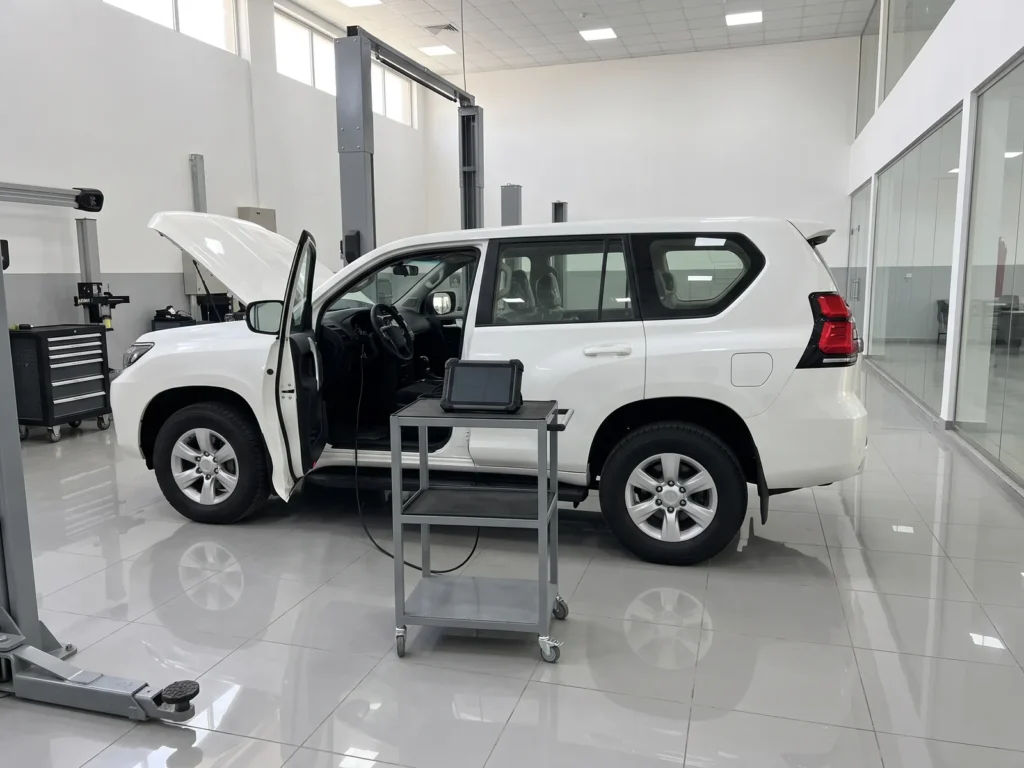
General Workshop Equipment & Tooling
Approved scan tools, an ADAS calibration platform and shop tooling — including ADAS PRO.
Scan and programming for 1996-onward vehicles (MS906 MAX) · ADAS PRO calibration Family details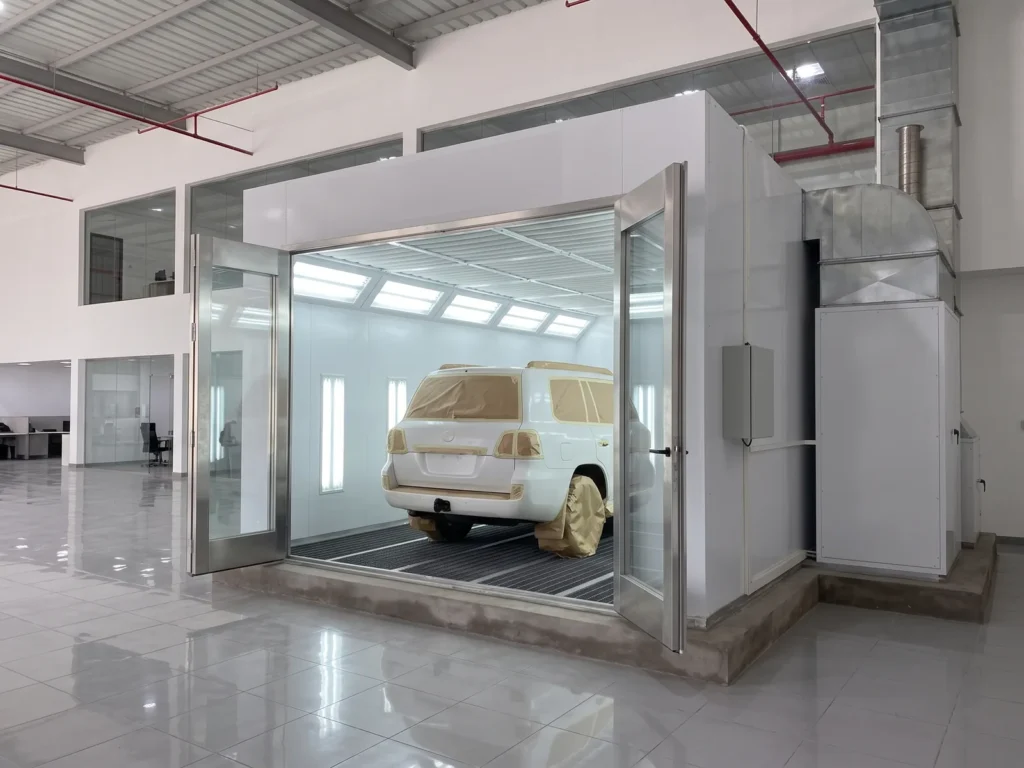
Paint Booths & Finishing Systems
For a dealership that offers brand-approved refinishing, sized to the largest vehicle in its range.
INTECH chamber 6,900 × 4,000 × 2,650 mm — custom builds to 24,000 mm long Family details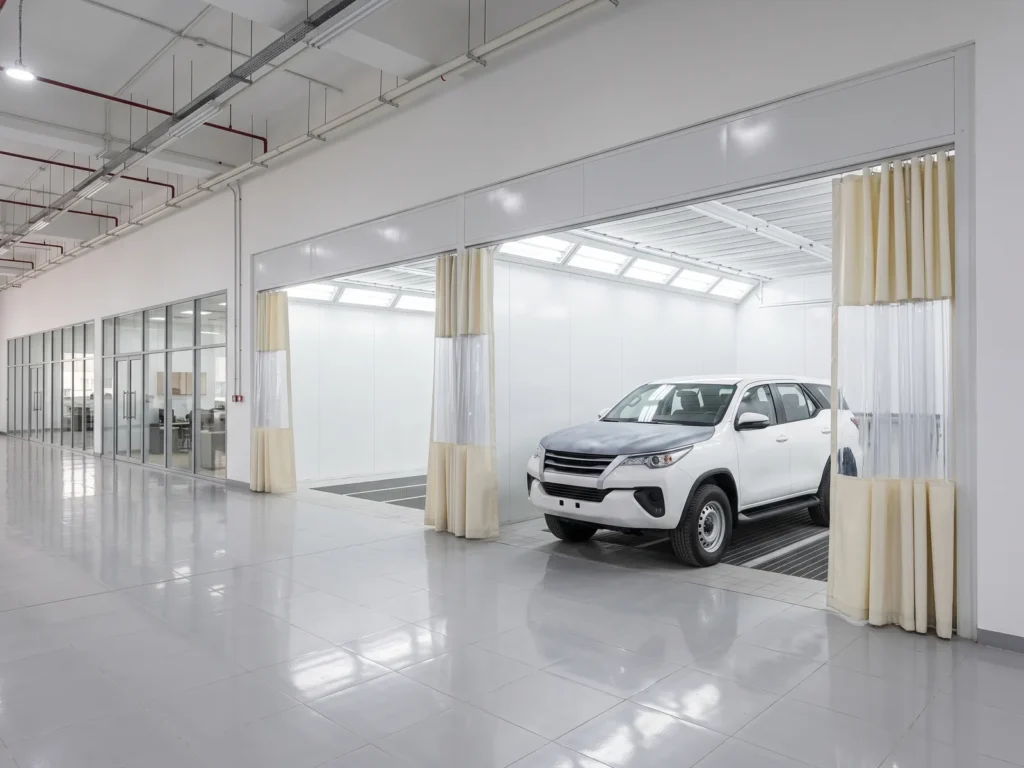
Prep Stations & Mixing Rooms
Controlling surface quality before the booth — what makes refinishing pass the manufacturer’s standard.
15,000 m³/h air capacity at 800 Pa · PURE 200 and PURE 120 Family details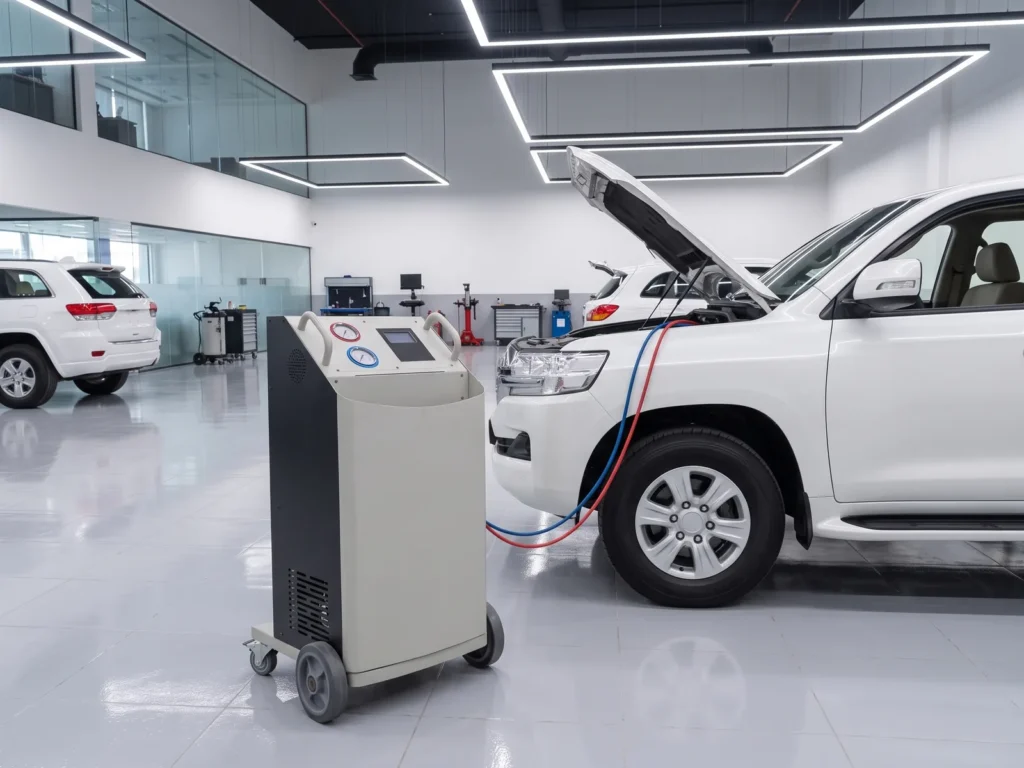
AC Service Stations
Vehicle A/C service as a standalone express service — among the highest-demand jobs in a Saudi summer.
120 L/min vacuum pump · 2 kg/min recharge · R134a and R1234yf (ACMAS301) Family details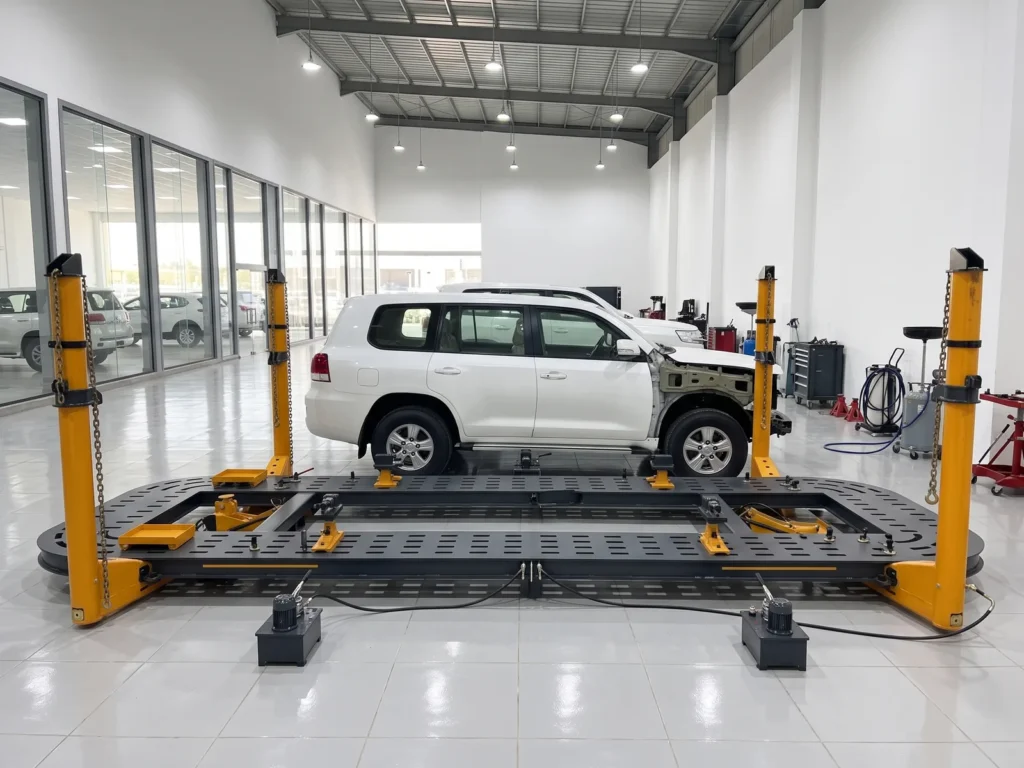
Chassis Pullers & Body Repair Equipment
Handling structural damage inside the dealership instead of sending it to an outside body shop.
Two to four pulling towers across the INTECH CR models Family details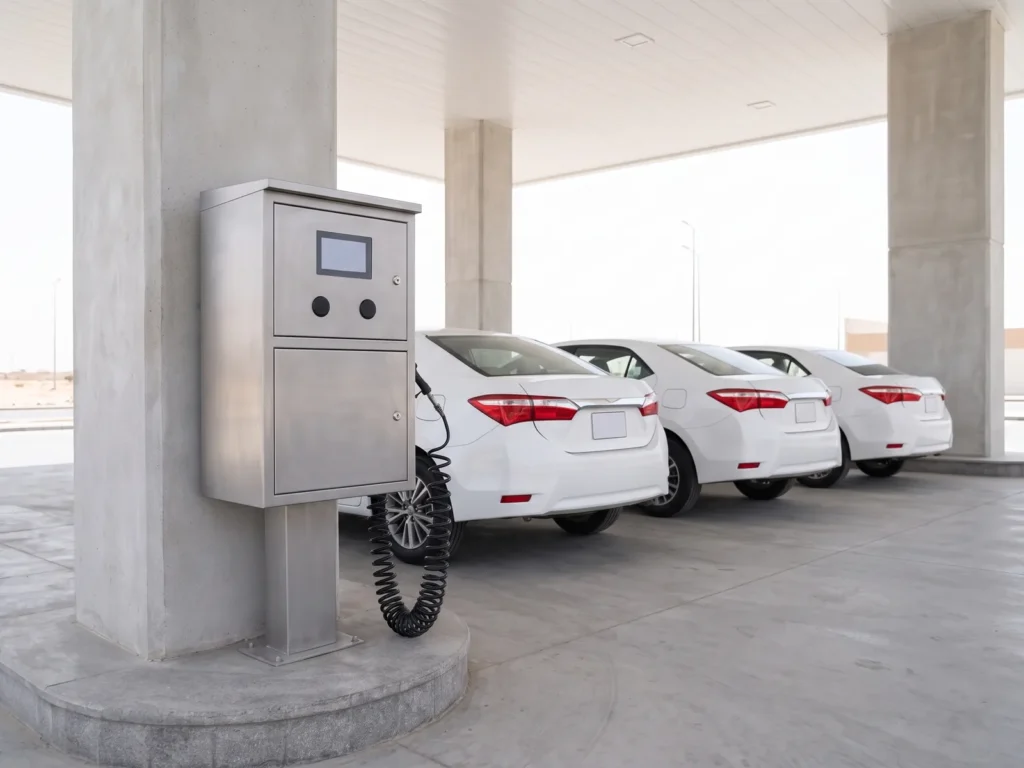
Fuel Station Equipment
Support equipment for delivery areas and in-house fleet service within dealership facilities.
Automatic digital self-service tire inflator (G5) Family detailsConfiguration notes
What actually changes for this sector
Configuration — not product identity — is the real difference between sectors.
| Item | Range / value | Why it changes for this sector |
|---|---|---|
| Bay count and split | Set per project | A dealership runs high-frequency scheduled servicing and heavy repair at once; the split is what prevents the queue. |
| Daily lift duty cycle | Set per project | Six-day continuous operation consumes equipment faster than an independent shop does, shifting the selection criterion from capacity to endurance. |
| EV battery handling area | The SHL-BG1200 battery lift measures 1350×790 mm with an 1800 mm lift height, and needs manoeuvring space around it | EV servicing needs an isolation and handling area that does not overlap the general service route. |
| Calibration area | Set per project | Post-repair calibration is a delivery condition on modern dealership vehicles, and it needs level space with controlled lighting. |
| Booth dimensions | INTECH chamber 6,900 × 4,000 × 2,650 mm — custom builds for anything larger | A dealer’s range may include commercial or large vehicles, and the size follows the largest of them, not the average. |
| Equipment preventive-maintenance schedule | By running hours under a renewable annual maintenance contract; filters are replaced twice a year in normal use | One lift down in a dealership takes a whole bay out, so preventive maintenance here is a capacity decision, not a cost decision. |
Regulatory and site considerations
- Manufacturer requirements for service-centre fit-out and process documentation.
- Professional workshop requirements: ventilation, cooling, lighting and waste handling.
- SASO conformity for imported equipment.
- Fire and safety requirements in service areas and in oil and battery storage.
- Municipal requirements for a dealership service centre are set per project by its location, and we review them with you before execution.
Frequently asked questions about this sector
How do I decide how many service bays the centre needs?
From your target vehicles per day and the average time of each job type. Scheduled servicing and express work consume short-cycle bays; heavy repair occupies a bay for hours. Separating the two is what raises capacity without extending the building.
Do you supply equipment for servicing electric vehicles?
Yes. The EV battery-lifting platform, model SHL-BG 1200, is published in our catalogue with a 1,200 kg capacity, and it is planned together with a dedicated handling area that does not overlap the general service route.
Is your equipment suitable for continuous dealership operation?
Equipment selection for a dealership starts from expected daily cycles, not capacity alone, and it is discussed together with a preventive-maintenance schedule and critical spares. Send your expected volume and we will recommend on that basis.
Do you plan the service centre, or only supply it?
We start with planning: bay count, bay allocation and the vehicle’s route through the building, then select equipment on that basis. The scope of installation and post-delivery support is Supply and installation across cities in the Kingdom; the cost of a visit outside Riyadh is set with the order.
Do you serve dealership centres outside Riyadh?
We are based in Riyadh and supply across the Kingdom. Supply and installation across cities in the Kingdom; the cost of a visit outside Riyadh is set with the order.
Planning a new service centre or an expansion?
Send your target vehicles per day and your building area, and we will come back with a bay layout and an equipment list built around the capacity you are aiming for.